

YouTube used to be described as a mobile-first platform. That description is now outdated. In 2025, YouTube Dominates US Screen Time largely because television has become its primary screen. Not phones. Not laptops. TVs.
This shift is more than a device change. It represents a behavioral transformation. People are watching YouTube the way they once watched cable television. Casually.
Continuously. Without a clear start or end. AWISEE reported that YouTube in 2025 is no longer just a platform for watching videos; it’s where audiences live, creators earn real money, and brands connect with their most engaged fans.
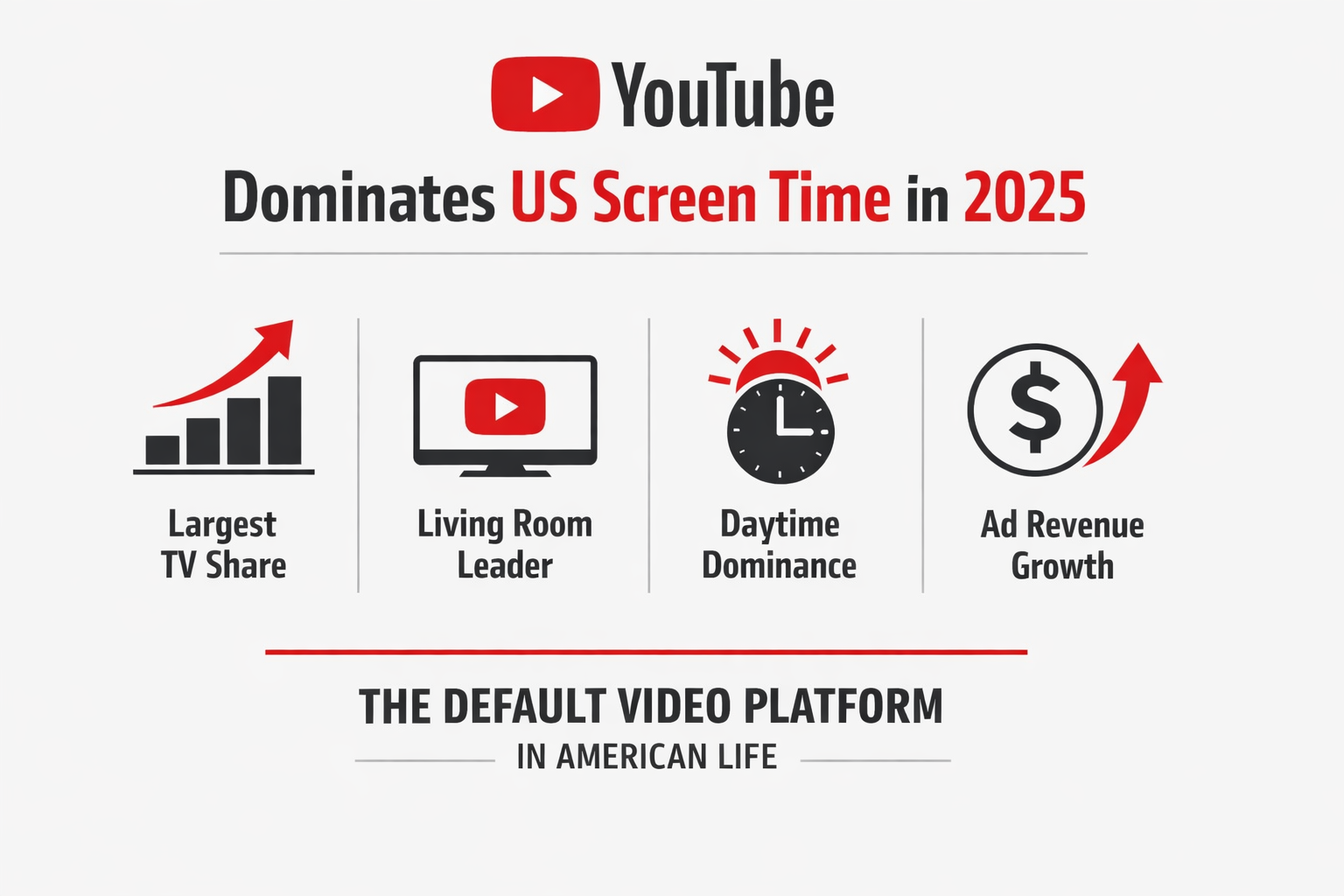
Nielsen data confirms that YouTube leads all streaming platforms in total US TV viewing share. Fast Company reporting shows that Americans now watch more YouTube on TVs than on smartphones. Together, these signals explain why YouTube has become the default video layer in American homes.
This article connects those dots. It explains the mechanics behind YouTube’s screen time dominance and why it is structurally difficult for competitors to replicate.
Build Visibility Where YouTube Viewers Actually Watch
AWISEE helps brands grow on YouTube by combining YouTube SEO with influencer marketing strategies designed for TV-first viewing behavior.
The 2025 Snapshot: What the Data Says About YouTube’s Lead
When analysts talk about YouTube’s rise, they often use vague language.
“Growing.”
“Expanding.”
“Popular.”
But vague words do not explain YouTube consumption US patterns. The data does.
Nielsen Confirms YouTube’s Position at the Top
According to Nielsen’s The Gauge report, YouTube captured 9.7% of all U.S. TV viewership in May 2024.
That made it the largest single streaming platform by total TV viewing share.
- Netflix: 7.6%
- YouTube: 9.7%
This was not a temporary spike. It was the highest share ever recorded for a streaming platform at the time. This is a key data point when discussing US streaming market share 2025.
YouTube’s Share Inside Streaming Is Even More Dominant
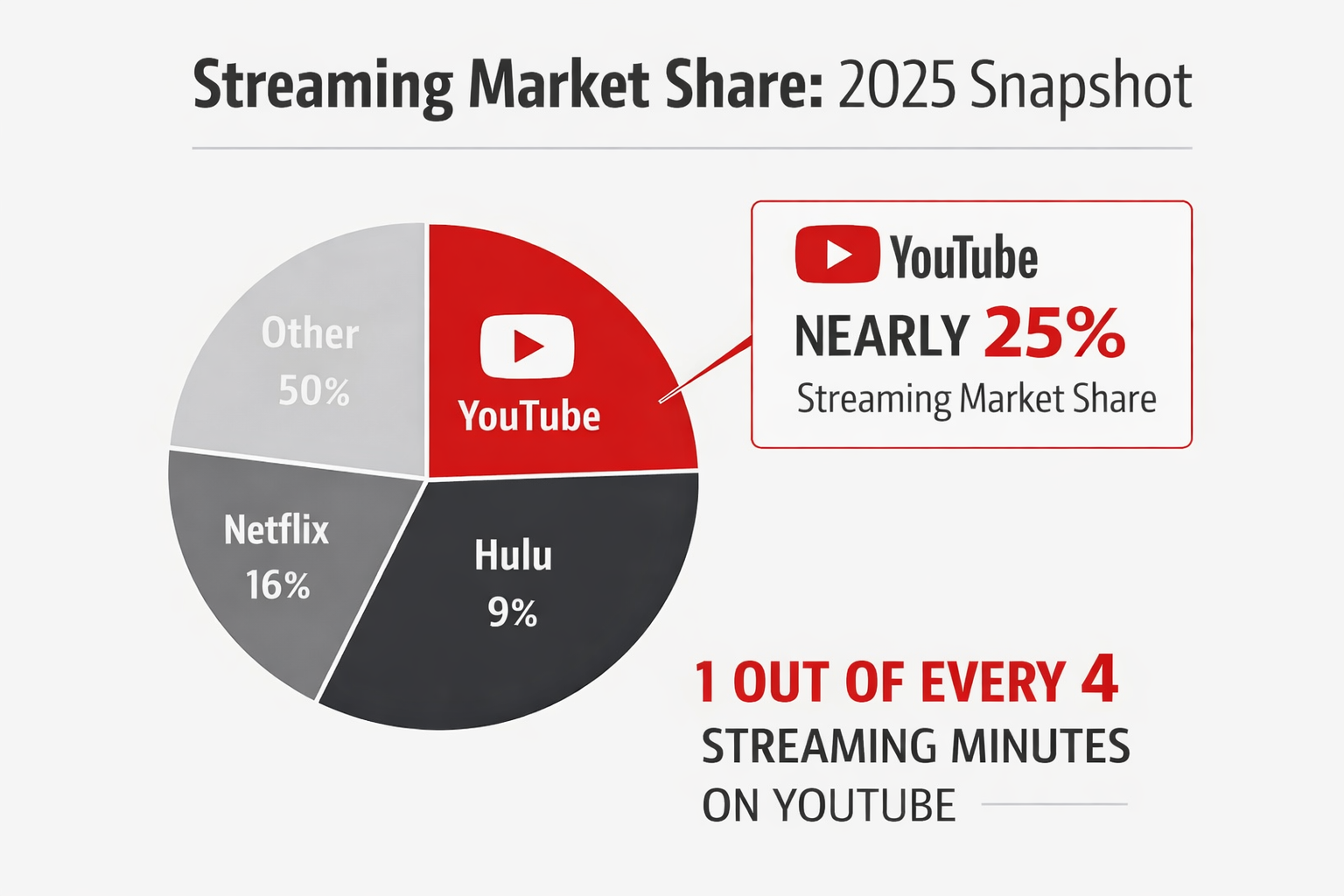
When narrowing the lens to streaming platforms only, YouTube’s position becomes even clearer. Among streaming services, YouTube holds nearly 25% of total U.S. streaming market share. That means:
- One out of every four streaming minutes
- Happens on YouTube
This matters because it reframes competition entirely. YouTube is not just competing with Netflix. It is competing with every video service at once.
This is a core reason YouTube Dominates US Screen Time rather than simply “leading.”
YouTube US Usage Is No Longer Mobile-First
For years, YouTube was treated as a phone app. That assumption no longer holds.
TV Has Overtaken Smartphones for YouTube Viewing in the US
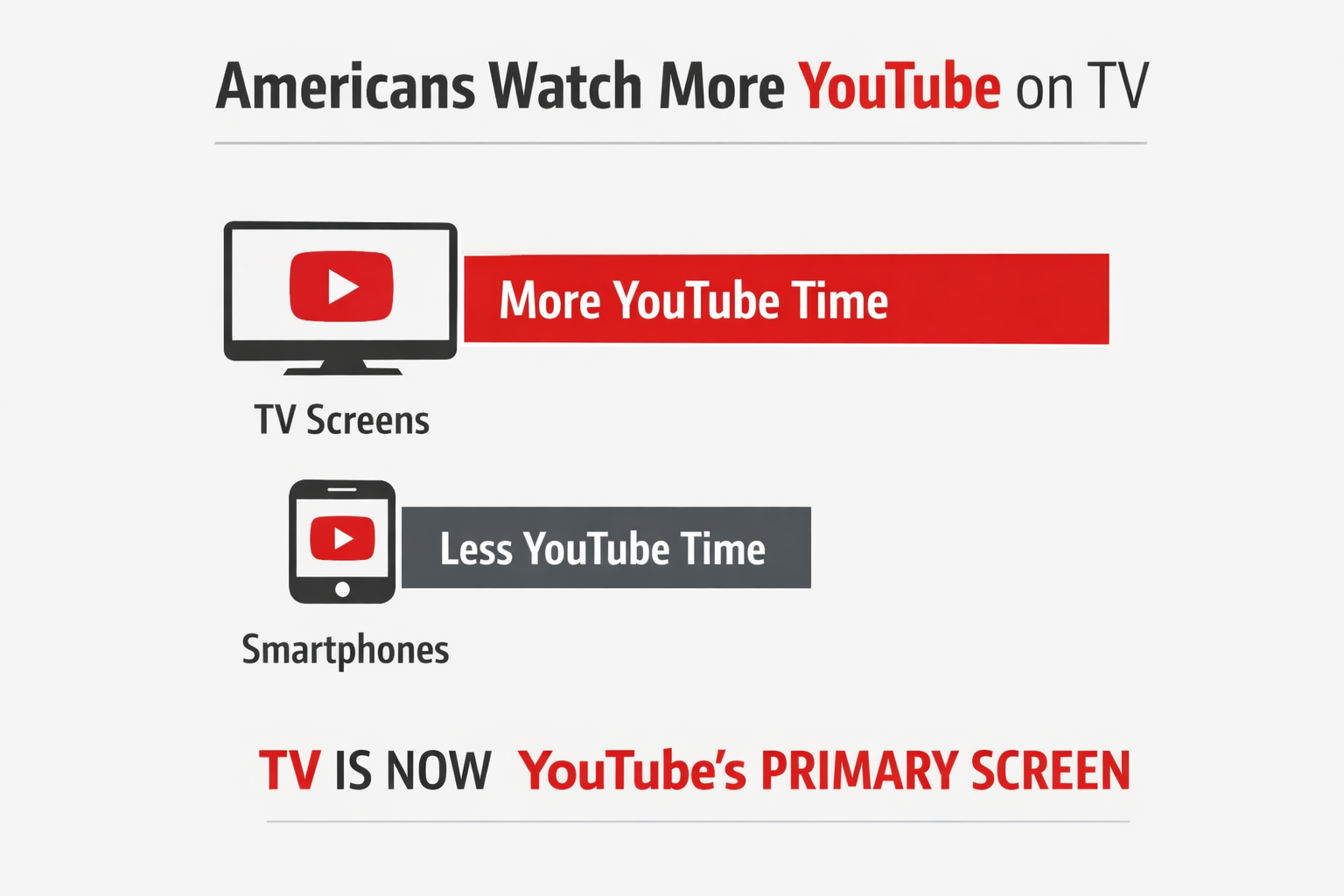
In early 2025, YouTube CEO Neal Mohan confirmed a major shift. Americans now watch more YouTube on TV screens than on smartphones.
This is not a minor trend. It is a structural change in YouTube US usage. It means YouTube is no longer background mobile content. It is primary screen content.
One Billion Hours a Day—and Increasingly on TV
YouTube users globally watch more than 1 billion hours of content every day. A growing portion of that time happens on television screens. This aligns directly with Nielsen data showing sustained TV dominance. It also explains why YouTube daily usage United States keeps expanding without replacing other platforms.
Market Share Proof: YouTube vs Netflix and the Streaming Field
Subscriber counts only tell part of the story. Time spent tells the real one.
US Streaming Market Share 2025: Why TV Share Matters More Than Apps
Traditional streaming metrics isolate platforms. Nielsen measures something more useful.
It tracks how Americans actually divide their TV time across all platforms.
That is how YouTube consistently emerges as the leader.
In January 2024, Mind Share reported that YouTube accounted for 8.6% of all television screen viewing, ahead of Netflix at 7.9%.
This marked 12 consecutive months of YouTube holding the top position in U.S. TV streaming. This is a foundational proof point in any video platform screen time comparison.
Nearly a Quarter of Streaming Attention Belongs to YouTube
Holding nearly 25% of streaming share signals something deeper. It shows YouTube is winning on default behavior, not niche viewing.
People turn on the TV. They open YouTube. They stay.
This habitual opening pattern explains why YouTube Dominates US Screen Time year after year.
Daytime Dominance: How YouTube Wins the Hours Others Ignore
Prime time receives the headlines. But YouTube wins a different battle.
YouTube Owns Daytime TV in the United States
A New York Times investigation revealed a simple pattern. YouTube dominates daylight viewing hours. From early morning to late afternoon, YouTube stays on.
People use it while:
- Making breakfast
- Exercising
- Meditating
- Cooking
- Watching local news
- Playing background content
By evening, some viewers switch platforms. But the majority of daily viewing time is already gone. This is a major reason average YouTube watch time US continues to rise.
Why Scripted Platforms Struggle During the Day
Daytime viewing behaves differently.
It is:
- A mix of short and long-form
- Often passive
- Often repetitive
- Utility-driven
YouTube fits this pattern perfectly. Netflix does not.
That is why YouTube consumption US expands without stealing prime-time shows. It captures hours others never built for.
Living Room Strategy: Why TV Became YouTube’s Growth Engine
YouTube did not accidentally win the living room. It invested in it.
This matters because the living room is where long sessions happen. And long sessions are how YouTube Dominates US Screen Time.
YouTube Designed a TV-First Experience
Inside YouTube, TV viewing is referred to as the “living room.” That concept shapes everything. Including:
- Home screen layout
- Recommendation logic
- Search behavior
- Playback controls
- Subscription visibility
Every interaction is optimized for a couch. Not a keyboard. Not a vertical screen. This design choice directly influences YouTube US usage patterns on television.
TV Viewing Changed How Creators Upload
As TV usage grew, creator behavior followed. The percentage of videos uploaded in 4K resolution increased by 35% year over year. This is not about visual vanity. It is about survival on large screens.
Creators know low-quality video does not work in the living room. This shift reinforces YouTube dominance US at the ecosystem level.
Creator Behavior Is Shifting Toward the Big Screen
YouTube’s dominance is not only about viewers. Creators are adapting too. And they are adapting because the TV is now the main screen.
Higher Quality Uploads Signal a TV-First Audience
More TV viewing means higher expectations. Creators are:
- Improving lighting
- Using better cameras
- Uploading higher resolutions
- Designing content for longer sessions
This directly supports longer watch times and deeper engagement. It also explains why average YouTube watch time US continues to rise alongside TV adoption.
Longer Videos Work Better on TV
Mobile viewing trained creators to think short. TV reverses that mindset. Creators no longer feel limited to:
- 8 minutes
- 10 minutes
- Quick cuts
TV viewers settle in. They watch longer. They stay. This behavior fuels YouTube daily usage United States without needing appointment viewing.
YouTube’s Monetization Flywheel Reinforces Screen Time
Attention creates leverage. And YouTube has more attention than any other video platform in the US.
Advertising Revenue Tracks Screen-Time Growth
In 2023, YouTube generated $31.5 billion in advertising revenue. That represented an 8% year-over-year increase.
Time spent becomes inventory. Inventory becomes revenue. This is a direct outcome of how YouTube Dominates US Screen Time.
Q1 Momentum Shows Acceleration, Not Saturation
In Q1 2024, YouTube’s ad revenue rose 21% year over year, reaching $8.1 billion. This confirms something important.
YouTube is not peaking. It is compounding.
YouTube Premium Adds Stability
Alongside ads, subscriptions matter. YouTube Premium surpassed 100 million subscribers.
That adds predictability. And reduces reliance on ad cycles alone. This strengthens the platform’s ability to sustain YouTube dominance US long-term.
Feature Expansion Turns Channels Into TV Destinations
YouTube is not standing still. It is actively redesigning itself for television.
New TV Channel Pages Change Discovery
YouTube introduced new TV channel pages featuring:
- Larger channel art
- Clearer branding
- More visible “Subscribe” buttons
On TV, discovery works differently than on mobile. Subscriptions become anchors. Not just taps. This improves retention and increases YouTube consumption US.
Shorts Are No Longer Mobile-Only
YouTube Shorts are expanding on connected TVs. Views for Shorts on TVs increased by more than 100% year over year.
Short-form video follows attention. Not device categories. This blurs the old line between mobile and TV formats.
Competitive Reactions Across the Media Industry
YouTube dominates US screen time and it is creating uncertainty. And not everyone reacts the same way.
Netflix: Different Role, Same Attention Pool
Netflix does not frame YouTube as a direct content rival. But both platforms compete for:
- Viewer time
- Advertising budgets
Netflix’s ad-supported tier now overlaps with YouTube’s core revenue model. This places YouTube at the center of video platform screen time comparison discussions.
Disney and Amazon Are Watching Closely
Disney closely monitors YouTube’s influence on younger audiences. Amazon responded differently.
It partnered with YouTube creator MrBeast for exclusive content. That signals recognition, not dismissal.
What Video Platform Screen Time Comparison Reveals
Not all platforms serve the same purpose. This is the key insight.
Two Viewing Modes, One Dominant Aggregator
Scripted platforms dominate:
- Prime time
- Intent-driven viewing
- Appointment watching
YouTube dominates:
- Daytime
- Background sessions
- Utility viewing
- Habitual opening
This is why YouTube Dominates US Screen Time without replacing Hollywood. It absorbs the rest of the day.
YouTube Becomes the Default Video Layer
The pattern is clear. People do not actively choose YouTube every time. They default to it. That is the strongest form of dominance in the US media ecosystem.
YouTube dominates US screen time and the lead is not temporary. It is structural.
- It owns daytime viewing
- It wins the living room
- It adapts faster than competitors
- It monetizes attention efficiently
- It supports multiple viewing needs at once
That is why YouTube Dominates US Screen Time in 2025.
Turn YouTube Screen-Time Data Into Brand Growth
Knowing that YouTube dominates US screen time is only the starting point. AWISEE helps brands act on that insight through YouTube SEO optimization and partnerships with creators who capture sustained watch time on TV.