

Non-profits don’t need million-dollar budgets to gain attention—they need the right story, media-savvy tactics, and a reliable strategy. What follows is a curated list of proven ways to get free and positive press that boosts visibility and fundraising potential.
Effective PR for non-profit organizations isn’t about flashy headlines—it’s about building long-term credibility with the public, media, and donors. Whether you’re launching a campaign or telling a donor story, PR for non-profit organizations is your most powerful tool to gain trust. These methods are designed to help charities become their own best storytellers.
1. Craft a Story Worth Sharing
Media outlets are flooded with pitches, but few have the kind of emotional power that sticks. The secret? Don’t talk about what you do; talk about who you helped and how it changed their life.
Was a student able to graduate because of your after-school program? Did your mobile health unit save someone in a rural area? These stories go beyond stats. They connect.
PR for non-profit organizations thrives on human connection. While numbers show reach, stories show impact. And journalists? They’re always searching for real human narratives.
2. Build Relationships with Local Media
Reporters trust those they know. Take time to build ongoing connections—don’t just show up when you want coverage. Invite journalists to events, send tailored story pitches, and follow up with genuine thank-yous.
This is a cornerstone of PR for non-profit organizations, especially for small and mid-sized charities focused on local impact.
3. Create a PR Calendar Around Seasonal Moments
Timing matters. Align PR efforts with dates like Giving Tuesday, World NGO Day, or your local awareness events. Journalists often look for stories tied to timely events—make your pitch more relevant by syncing your story with the calendar.
| Month | Awareness Days/Events | PR Opportunity |
|---|---|---|
| February | World NGO Day (Feb 27) | Release an annual impact report |
| April | Earth Day (Apr 22) | Launch eco-campaigns or highlight green goals |
| November | Giving Tuesday | Announce donor challenges and feature success |
This approach enhances seasonal visibility and strengthens ongoing PR for non-profit organizations through timely and relevant storytelling.
4. Leverage Non-Profit Press Release Tips
A great press release tells a story fast. Use a powerful subject line, answer the 5Ws within the first paragraph, and include stats, quotes, and photos. Strong visuals paired with compelling headlines increase your chance of being published.
Among essential non-profit press release tips:
- Add a contact with a name, not a generic email.
- Embed photos that tell the story, not just illustrate it.
- End with a short, snappy boilerplate about your organization.
In the crowded non-profit landscape, standing out requires more than just good intentions—it demands strategic communication. AWISEE specializes in PR and brand management tailored for non-profit organizations. Our team understands the unique challenges you face and crafts compelling narratives that resonate with your audience.
From press releases to media outreach, we ensure your mission gets the attention it deserves.
5. Use Digital PR to Amplify Social Impact
In modern PR for non-profit organizations, you don’t just pitch journalists—you reach your audience directly.. Repurpose press mentions as social media content, feature donor stories in newsletters, and build a content engine that sustains visibility beyond one news cycle.
Most Used PR Tactics by Non-Profits (2024 Survey)
This data, as outlined in the latest M+R Benchmarks Report, supports how public relations for fundraising campaigns has evolved beyond press mentions into a multi-channel strategy.
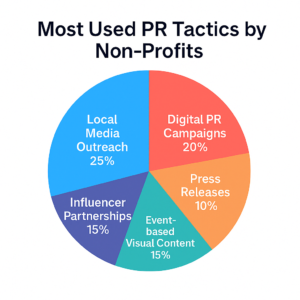
This data supports how public relations for fundraising campaigns has evolved beyond press mentions into a multi-channel strategy.
- 25% – Local Media Outreach
- 25% – Digital PR Campaigns
- 20% – Press Releases
- 15% – Influencer Partnerships
- 15% – Event-based Visual Content
6. Offer Visuals That Tell Your Mission
A picture isn’t just worth a thousand words—it can also be worth a full-page newspaper spread or a front-and-center slot on local TV.
Don’t wait for the media to ask. Be proactive. Create a folder with high-resolution photos showing the work you do—volunteers in action, beneficiaries engaging with your programs, or behind-the-scenes logistics. Include a mix of landscape shots (ideal for banner placements) and portraits (great for social media).
These visuals are invaluable when pitching to editors or supporting your media outreach for non-profits. Even if your story gets bumped, strong visuals may still be used in roundup features or follow-ups.
Bonus: Add impact captions with names and short quotes—it humanizes the photo instantly.
7. Collaborate with Micro-Influencers and Local Figures
You don’t need Hollywood stars. You need trust. Micro-influencers—especially local ones—can generate meaningful engagement with your target communities. Think: a local teacher who’s a parent influencer, a regional pastor on TikTok, or a neighborhood athlete with a tight follower base.
These partnerships are cost-effective and carry immense authenticity. They’re among the most effective PR tactics for non-profit organizations when promoting charity events and grassroots causes—especially in areas where word-of-mouth and community trust outweigh big-name buzz.
Here’s how to start:
- Search hashtags relevant to your cause + location (e.g., #AustinNonprofits)
- Identify creators with 1K–10K followers and 5%+ engagement
- Reach out with a personal message and offer a collaborative experience, not just a transaction
Micro-influencers often care about cause alignment more than compensation—so lead with your mission.
8. Train Your Team for Media Interviews
When a journalist calls, your executive director can’t improvise. Your outreach coordinator shouldn’t stumble. And your volunteers—if quoted—need to stick to key messages.
That’s where media training comes in. Prepare talking points for the most common themes (Who are you? What do you do? Why now?). Then conduct mock interviews. Practice answering both easy and difficult questions with clarity and confidence.
Your team should be able to:
- Stay on message without sounding scripted
- Give soundbites that reporters can quote easily
- Redirect tough questions toward positive impact
This kind of training is foundational for successful PR for non-profit organizations, especially during fundraising campaigns when reporters request interviews during high-profile drives.
Remember, confidence builds trust—on camera, in print, or on a podcast.
9. Host a Newsworthy Event
Not all events get press attention. To stand out, your event needs a hook. Ask yourself: What makes this timely, human-focused, and visually engaging?
Ideas that get covered:
- A public “Day of Service” with hundreds of volunteers in action
- A symbolic event like planting the 1,000th tree in your green project
- A pop-up fundraising booth with interactive activities and local celebrity guests
Plan logistics with the media in mind:
- Provide a press contact on-site
- Offer media kits with fact sheets and interview quotes
- Set up photo-friendly backdrops with branding
This makes it easier for journalists to cover your story—and increases the odds your nonprofit gets featured.

10. Publish Op-Eds From Your Leadership
Journalists don’t always have the bandwidth to report on every good cause—but opinion sections are your open door. An op-ed from your founder or director puts your message into the public narrative on your terms.
Topics could include:
- A call to action around an urgent cause
- A reflection on a current event from your nonprofit’s lens
- A critique or proposal related to local policy changes affecting your community
Before submitting, check each outlet’s guidelines (word count, formatting, exclusivity). Local papers are especially open to well-written nonprofit perspectives.
Well-placed op-eds increase brand authority and offer indirect media coverage. They’re a smart component of any long-term charity public relations strategy.
11. Use Strategic Calls to Action in All Communications
Every news article, every email, and every blog post needs a next step. Otherwise, readers will nod in agreement and move on.
CTAs don’t have to scream “donate.” Depending on the content, they can:
- Invite readers to share the article
- Encourage social follows or event signups
- Prompt a volunteer application or petition signature
Ensure the CTA matches the medium. A press release may include a “For more information” section with a link. A social post should have a short CTA in the first line.
How to get media coverage for your non-profit or charity is only part of the goal—what matters most is converting that attention into action.
12. Monitor And Measure Media Coverage
You can’t improve what you don’t track. Monitoring press mentions, social shares, backlinks, and engagement metrics helps you evaluate what’s working.
Here’s a quick breakdown of what to track:
| Metric | Tool Suggestions | Purpose |
|---|---|---|
| Brand Mentions | Google Alerts, Mention.com | See who’s talking about you |
| Press Pickup | Meltwater, Cision | Track media coverage across outlets |
| Social Engagement | Hootsuite, Buffer | Measure reach and reaction on platforms |
| Website Traffic from PR | Google Analytics | Assess spikes linked to press campaigns |
This table provides essential PR metrics, recommended tools, and why each one matters.. Here’s a brief explanation of each row:
Brand Mentions
- Tools: Google Alerts, Mention.com
- Purpose: Helps you monitor who is talking about your brand online — useful for reputation management and awareness tracking.
Press Pickup
- Tools: Meltwater, Cision
- Purpose: Tracks how much media coverage your brand receives across various news outlets, helping assess the impact of your PR efforts.
Social Engagement
- Tools: Hootsuite, Buffer
- Purpose: Measures how users are interacting with your brand’s content on social media, providing insight into reach and audience reactions.
Website Traffic from PR
- Tool: Google Analytics
- Purpose: Shows how much of your website traffic is generated from PR campaigns, allowing you to connect media exposure to actual user visits.
The results will guide future strategy and also validate ROI for your public relations for fundraising campaigns.
13. Keep Media Contacts Updated Regularly for PR For Non-Profit Organizations
Don’t wait for the next big campaign. Build long-term visibility by staying in touch.
Send quarterly press updates including:
- A brief impact stat or quote from a beneficiary
- Teasers about upcoming events or projects
- A fresh story angle or thought leadership pitch
This keeps you top-of-mind and increases the odds your nonprofit will be featured in upcoming media planning cycles. A well-maintained relationship turns your organization into a go-to source for meaningful stories.
Journalists remember those who consistently deliver value, not just headlines.
Secure Media outreach for non-profits That Matters with AWISEE
Getting media coverage is more than sending out press releases; it’s about building relationships and telling stories that captivate. AWISEE excels in securing meaningful media exposure for non-profits. We identify the right outlets, pitch compelling stories, and ensure your organization’s voice is heard.
You focus on your mission—we’ll make sure the world hears about it. Let AWISEE help you shine a spotlight on your cause.