
Last updated:
Influencer marketing is evolving fast in 2025. Influencer whitelisting is one strategy that’s making a big difference.
This approach allows brands to run ads using an influencer’s social media profile, which makes the ads look more personal and authentic.
And the results back it up: whitelisted ads can reduce CPA by 20–40%, according to Your Glow Up Agency.
So, why are brands and influencers both embracing this trend?
- Brands can reach more of the right people while controlling how the ads are shown.
- Influencers can earn extra revenue while growing their audience and visibility.
In this article, you’ll learn exactly how influencer whitelisting works, the types of whitelisted ads, the benefits, and the best ways to do it right — all with real-world examples.
Whitelisting Instagram: What Is Influencer Whitelisting?
At its core, influencer whitelisting means that an influencer gives a brand permission to run ads through the influencer’s social media profile — especially common when whitelisting on Instagram to maximize visibility and targeting.
In other words, the brand uses the influencer’s account to promote posts, either by boosting existing content or creating new ads. These ads appear under the influencer’s name, not the brand’s.
This matters because:
- People trust influencers more than brands.
- Posts from influencers feel more natural and less like “ads.”
Example
A whitelisted influencer ad might look like a normal post from the influencer. It could say: “I use this product daily and love it.”
The post will be marked as an ad, but it will blend in naturally with the influencer’s usual content.
Whitelisting vs. Allowlisting
The terms “whitelisting” and “allowlisting” are often used interchangeably — they mean the same thing.
In fact, many in the industry now prefer the term creator licensing — a more inclusive way of saying that a brand gets permission to run ads through a creator’s profile.
Bridging Organic + Paid Media
This approach blends the best of both worlds:
- Organic: The influencer’s personal connection with their audience.
- Paid: The brand’s ability to target specific audiences and scale the campaign.
Result: Authentic content reaches the right people, and performs better than a generic brand ad.
How Does Influencer Whitelisting Work?

So, how does influencer whitelisting work in practice?
Here’s a simple breakdown.
1. Permissions Granted
The influencer gives the brand permission to access their profile for ad purposes.
This usually happens through one of these platforms:
- Meta Business Portfolio (used for whitelisting on Instagram and Facebook)
- TikTok Business Center (through ad authorization codes)
Influencers can use tools like Leadsie to make the process faster, easier, and more secure.
2. Ad Creation
Once access is granted:
- Brands can boost existing whitelisting influencer content to extend reach beyond the creator’s organic audience
- Brands can create new ads (dark posts) using the influencer’s handle
The influencer’s followers — and lookalike audiences — will see the ads.
3. Running The Campaign
The brand manages:
- Targeting
- Budget
- Creative variations
- Performance tracking
The influencer doesn’t manage this part — the brand handles the ads behind the scenes.
Different Types Of Influencer Whitelisting
There isn’t just one way to run an influencer whitelisting campaign.
Here are the 4 most common types — each with its own pros and cons.
Boosting Branded Content: What It Is
The influencer creates a post that tags the brand.
Then, the brand boosts this post so more people see it.
Example
An Instagram post where the influencer talks about using a skincare product, tagged with the brand. The brand promotes this post to reach more potential buyers.
Pros
- The content feels authentic, created by the influencer.
- Easy to scale to large audiences.
Cons
- Brands can only boost the post to the influencer’s existing audience (no full access to new lookalike audiences).
Partnership Ads
What It Is
The influencer creates content for the brand and tags the partnership using the platform’s official tools (like Instagram’s branded content tool).
Example
You see a post that says: “Paid partnership with Brand X.”
If the brand gets influencer whitelisting access, they can control targeting and ad variations.
Pros
- Brands can create A/B tests and customize the ad.
- More flexibility on targeting and creative elements.
Cons
- Requires extra setup and permissions.
- Influencers may limit what the brand can do with the content.
Dark Posting: What It Is
The brand creates ads that don’t appear on the influencer’s feed — only on the feeds of targeted users. These are called dark posts.
Example
You see a whitelisting Instagram ad under an influencer’s handle, but if you visit their profile, the post isn’t there — a common tactic with dark posting.
Pros
- Brands can test many variations of the ad without cluttering the influencer’s feed.
- These ads can be precisely targeted to specific audience segments.
- Lookalike audiences can be used.
Cons
- Requires more trust between brand and influencer, since the brand is running ads directly under the influencer’s name.
Allowlisting: What It Is
A term often used interchangeably with influencer whitelisting — but sometimes it implies full access permissions.
This allows the brand to:
- Upload and edit content
- Access full audience data
- Manage the ads entirely
Pros
- Maximum control for the brand.
- Ability to experiment and scale fast.
Cons
- Influencers may hesitate to give full access.
- Requires a very clear and trusted agreement.
Benefits Of Influencer Whitelisting
Now, why do so many brands and influencers love influencer whitelisting?
Here’s what both sides gain.

For Brands:
- Lower CPA — brands can lower cost per action by 20–40% using whitelisted influencer ads
- Higher engagement and conversions — whitelisted posts feel more personal, driving better results.
- Access to new/custom audiences — brands can use influencer audience data to build powerful lookalike audiences.
- Full campaign control and measurement — no waiting on influencer reports; brands can track ROI directly.
For Influencers:
- Revenue stream — they can charge brands for influencer whitelisting access.
- Audience growth — brand ad spend helps the influencer reach new people.
- Brand partnerships & exposure — more opportunities for long-term partnerships.
Unlock Influencer Whitelisting With AWISEE
Ready to simplify and scale your influencer whitelisting campaigns? Partner with a top whitelisting influencer agency to ensure it’s done right. AWISEE offers seamless influencer marketing + expert collaboration with top influencers in your niche to ensure your brand reaches the right audience — fast.
- Access influencers across all major platforms.
- Run compliant and optimized whitelisting campaigns.
- Drive better ROI and long-term brand growth.
⚡ Scale Your Whitelisted Influencer Campaigns
Let AWISEE, a trusted whitelisting influencer agency, manage your influencer whitelisting—from creator access to campaign optimization. We streamline setup, tracking, and ad execution across TikTok, Instagram, and more.
Influencer Whitelisting Benefits vs Traditional Paid Ads

This bar chart compares key performance indicators between traditional paid ads and influencer whitelisting campaigns.
| Benefit | Traditional Paid Ads | Influencer Whitelisting |
| CPA Reduction | 5–10% | 20–40% |
| Engagement Rate | 1–2% | 3–5% |
| Authenticity Perception | Low | High |
| Conversion Rate | Moderate | Higher |
Influencer Whitelisting Best Practices
To get the most out of influencer whitelisting, both brands and influencers need to follow some key best practices.
For Brands:
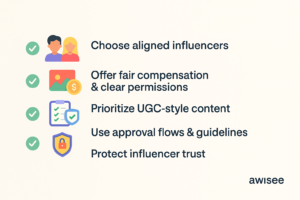
- Choose the right influencers — look for a natural fit with your brand and audience.
- Offer proper incentives & clear agreements — trust is key. Pay influencers fairly and define exactly what permissions you need.
- rioritize UGC-style and whitelisting influencer content — overly polished brand ads tend to perform worse compared to authentic creator-led material.
- Set up approval flows and content guidelines — both sides should know what’s acceptable.
- Build trust — influencers are trusting you with their audience. Protect that trust by being transparent and professional.
Common Mistakes For Brands To Avoid When Running An Influencer Whitelisting Campaign
Even though influencer whitelisting can deliver incredible results, some brands still fall into common traps.
Here are the mistakes to avoid if you want your campaign to run smoothly:
- Poor communication & unclear agreements
If both parties don’t clearly define who controls what, problems can arise fast. Always set expectations upfront. - Not properly compensating influencers
Remember — influencers are giving you access to their most valuable asset: their audience. Not offering fair compensation damages trust and can jeopardize future collaborations. - Running inauthentic content
Overly polished ads or content that doesn’t fit the influencer’s style can alienate audiences. UGC-style content performs much better. - Complex approval processes
Brands sometimes slow campaigns down with endless approvals and micromanaging. Keep it simple, and trust the influencer’s understanding of their audience. - Not monitoring performance properly
Without good tracking, it’s impossible to know what’s working or where to improve.
The Cost Of Influencer Whitelisting
You might be wondering: how much does influencer whitelisting actually cost?
Let’s break it down.
Typical Cost Structures
There are two common ways brands pay for whitelisting:
According to Social Snowball, % of ad spend — often 20–30% of the influencer’s original collaboration fee.
Flat fee based on impressions — calculated by how many times the ad will be shown.
Factors Impacting Cost
- Follower count — the larger the audience, the higher the cost.
- Campaign duration — longer campaigns cost more.
- Platform — Meta vs TikTok vs YouTube may have different costs.
- Scope of access — full allowlisting (full account access) may cost more than basic boosting.
Common Cost Structures In Influencer Whitelisting

This pie chart shows the breakdown of how brands pay for influencer whitelisting.
| Cost Structure | % Share |
| % of Ad Spend | 50% |
| Flat Fee per Impressions | 35% |
| Hybrid (Base fee + % of ad spend) | 15% |
Read more about Influencer Pricing: The Cost of Influencers in 2025 here.
How To Negotiate Influencer Whitelisting Rights
Negotiation is a crucial part of successful influencer whitelisting.
Negotiation Tips For Brands
- Be transparent — explain exactly what permissions you need and why.
- Be fair with compensation — respect the influencer’s value.
- Offer clear creative guidelines — but allow room for authenticity.
Important Contract Clauses

When drafting your agreement, be sure to include:
- Content usage rights & duration
How long can the brand use the content? Where can it be shown? - Brand guidelines
What tone, style, and visual rules must the content follow? - Approval rights
Does the influencer get to approve each ad variation? - Compensation model
Define payment terms clearly — no surprises later.
Negotiation Tips For Influencers
- Protect your audience — set clear limits on what brands can do.
- Control your brand voice — make sure you have approval over ad content.
- Know your value — don’t be afraid to negotiate a fair rate for influencer whitelisting access
Is Influencer Whitelisting Legal?
Yes — if done properly!
But there are legal considerations you must follow, especially if you’re new to the concept of what is influencer whitelisting and how it works in advertising agreements.
Legal Considerations & Compliance
- Always use a written contract that defines exactly what permissions the brand has.
- Both parties should fully understand what access is being granted.
Disclosure Rules
- Influencers must still disclose sponsored content clearly — using #ad, #sponsored, or branded content tags.
- Brands must follow platform policies for transparency.
Why A Strong Contract Is Essential
It protects both sides:
- Influencers retain control over their audience and brand.
- Brands ensure they can legally use and promote content as agreed.
Managing “Rights In Perpetuity” Properly
Watch out for contracts that give brands the right to use influencer content “in perpetuity.”
Influencers should carefully define:
- Which specific content the brand can use.
- How long the brand can use it.
Influencer Whitelisting Examples: Whitelisted Influencer Ads

Below are some influencer whitelisting examples that show how top brands use creator content in paid campaigns.
When Influencers Go Incognito (for Ads!)
According to influencity, Alo Yoga, that activewear brand you’ve probably seen everywhere, did something pretty clever. They got fitness influencer @TawnyJanae to create some awesome posts rocking their gear on her Instagram.
But here’s the kicker: Alo Yoga didn’t just leave those as regular influencer posts. Nope, they secretly turned that content into paid ads.
The wild part? Those ads weren’t popping up on TawnyJanae’s usual feed or even directly to her followers. Instead, they were zapped out as super-targeted ads to folks who might not even follow her or @AloYoga. Sneaky, right?
HexClad’s Stealthy Cookware Ads
And check out another cool trick, this time from HexClad, the cookware brand —
Influencer whitelisting is one of the most powerful marketing tactics for brands in 2025.
When brands and influencers approach it with the right strategy, clear agreements, and good tracking, both sides benefit:
- Brands get authentic, scalable reach.
- Influencers grow their audience and earn more income.
As influencer marketing keeps evolving, influencer whitelisting is a technique you can’t afford to ignore.
Plan carefully, communicate clearly, and you’ll see the results.
📲 Simplify Influencer Whitelisting With AWISEE
Ready to launch compliant, high-impact influencer campaigns that convert? AWISEE helps brands access, manage, and optimize whitelisted ads with zero stress.