

Last updated:
In 2025, influencer marketing for tourism has evolved into a sophisticated, authenticity-driven strategy where real storytelling and audience connection are everything. Glossy photos and staged captions are no longer enough to captivate today’s travelers.
Today’s travelers crave trusted guides and transparent experiences. Influencers who deliver that authenticity are driving measurable results—increasing awareness, hotel bookings, and tour reservations. Audience engagement, long-term partnerships, and storytelling authenticity have officially replaced the one-off sponsored posts of the past.
Brands that truly understand how to collaborate with influencers authentically are the ones thriving in this new tourism marketing landscape.
AWISEE connects you with local micro-influencers and top global creators, ensuring you find the best travel influencers to promote destinations effectively. Whether you want to boost livestream reach or drive more bookings through travel reels, AWISEE offers customized influencer marketing and collaboration services
How Gen Z and Millennials Are Shaping Travel Decisions
Look around, and it’s clear: Gen Z and Millennials are steering the future of travel.
These travelers are skeptical of traditional advertisements. Instead, they trust personal recommendations from people they relate to—particularly influencers.

This visual highlights the shift in influence from traditional ads to peer recommendations and the rapid decision-making journey powered by platforms like TikTok.
- Peer-to-peer influence: A travel tip from a favorite creator feels more trustworthy than a paid ad.
- Authentic adventures: Gen Z and Millennials prioritize unique, off-the-beaten-path experiences, often discovered through influencers’ social media posts.
- Instant action: Decision-making is faster than ever. One TikTok video or Instagram Reel can inspire immediate travel bookings.
For brands targeting these audiences, partnering with the right influencers is essential—not optional.
Influencer Marketing For Tourism: Key Trends In Travel Influencer Campaigns 2025
The landscape of travel influencer campaigns 2025 is dynamic and full of opportunity for tourism brands.
Major trends include:
- Sustainability at the forefront
Eco-tourism is booming. Influencers who champion sustainable stays, low-impact tours, and carbon offset programs are leading engagement rates. - Solo travel going mainstream
What was once a niche is now a major force. Solo travel influencers are empowering others to explore independently and confidently. - Luxury meets experience
Influencers promoting boutique hotels, private tours, and one-of-a-kind experiences are driving high-end traveler interest. In 2025, the mantra is clear: experiences over possessions.
Instead of casting a wide marketing net, brands succeed by creating targeted, value-driven storytelling partnerships.
If you’re in the travel industry, learning How Travel & Tourism Brands can use Influencer Marketing will help you connect with adventure-hungry audiences.

Video Content’s Growing Importance in Travel Marketing
If one image once captured the spirit of travel, today it’s the short video that wins hearts—and bookings.
Short-form videos have become a dominant force in social media campaigns for the tourism sector:
- TikTok vlogs showcasing five-minute city tours
- Instagram Reels sharing dreamy resort stays
- YouTube Shorts offering quick travel tips and hotel previews
- Virtual tours through VR and AR integrations
Short-form video content triggers emotion, highlights authentic travel experiences, and helps viewers picture themselves there—ultimately driving more bookings.
In 2025, video-first content isn’t just a bonus for tourism marketing—it’s the foundation.
Top Mistakes Tourism Brands Make When Collaborating with Influencers
Influencer marketing offers immense rewards—but it’s also easy to get wrong.
Here are the biggest pitfalls tourism brands must avoid:
*Vague Project Briefs
Without clear goals, tone guidelines, and deliverables, even skilled influencers can miss the mark.
*Mismatched Partnerships
Selecting influencers solely for their follower counts (without checking for audience fit or brand alignment) leads to campaigns that feel inauthentic.
*One-Off Campaigns
Travel isn’t always an instant decision. Building familiarity over time through multi-post, long-term collaborations is far more effective than brief, transactional campaigns.
Brands embracing best practices for tourism boards working with influencers—clear communication, value alignment, and relationship-building—are seeing the best ROI in influencer-driven tourism marketing in 2025.
The Power of Livestreaming in Tourism Social Media Campaigns for the Tourism Sector
In 2025, influencer marketing for tourism is embracing livestreaming as one of the most powerful tools to engage potential travelers. Livestreamed travel experiences—whether a real-time walkthrough of a boutique hotel, a guided street tour of a historic city, or a glimpse behind the scenes of a secluded eco-lodge—are transforming social media campaigns for the tourism sector.

This live format strengthens the connection between influencer and viewer, making destinations feel instantly accessible and actionable:
- Authenticity reigns: Livestreams deliver raw, unfiltered glimpses into destinations, building immediate trust with viewers.
- Interactive engagement: Real-time Q&As create a direct bridge between travelers and destinations, sparking faster decision-making.
- Higher conversion rates: Livestream viewers are significantly more likely to make bookings compared to those exposed to traditional content.
For tourism brands in 2025, leveraging livestreams shortens the journey from wanderlust to wallet—and it’s becoming a must-have, not just a nice-to-have.
Choosing the Right Influencers for Tourism Marketing Strategies with Influencers
Selecting the right partners is at the core of successful tourism marketing strategies with influencers.
Here’s what brands must focus on:
- Audience demographics: Match influencer audiences with your destination’s target travelers (age group, travel style, income level).
- Authenticity and storytelling style: Influencers who naturally incorporate travel experiences into personal narratives build deeper connections.
- Regional relevance: An influencer familiar with the culture and geography of your target destination resonates far more than a generalist creator.
- Engagement quality: Prioritize influencers who foster real conversations and community, not just high vanity metrics.
The right influencer-brand pairing feels organic—and it’s exactly what today’s travelers are looking for.
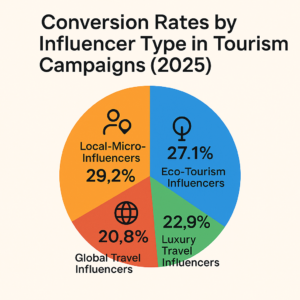
Conversion Rates by Influencer Type in Tourism Campaigns (2025)
Description:
This pie chart illustrates the conversion power of different influencer types, from local micro-influencers to global travel influencers, across tourism campaigns.
- Local Micro-Influencers hold the largest share with 29.2%, showing they are the most effective at converting audiences into customers, likely due to their strong community trust and localized appeal.
- Eco-Tourism Influencers follow closely, influencing 27.1% of conversions, reflecting growing consumer interest in sustainable and responsible travel.
- Luxury Travel Influencers contribute 22.9%, demonstrating a solid but more niche impact, especially among high-end travel consumers.
- Global Travel Influencers account for 20.8%, suggesting they are still important but slightly less effective than more specialized or localized influencers.
Start Your Tourism Influencer Strategy with AWISEE Today!
Want to stand out in 2025’s competitive travel space? Partner with AWISEE for full-service tourism influencer campaigns that drive real bookings. Get discovered. Get trusted. Get booked.
The Importance of Local Influencers for Domestic Tourism
While global travel influencers have broad appeal, local influencers are increasingly critical for promoting domestic tourism.
Here’s why:
- Local insights: From hidden hiking trails to lesser-known eateries, local influencers showcase authentic experiences international influencers might overlook.
- Audience trust: Locals view recommendations from hometown creators as trustworthy and achievable.
- Relatable travel: Instead of “bucket list” trips, local influencers present weekend getaways, regional festivals, and accessible adventures.
Tourism boards across Latin America, Europe, and Asia are increasingly shifting their influencer budgets to micro- and nano-influencers who speak the language, understand the culture, and know the hidden gems.
How Travel Brands Are Using Influencer Marketing in 2025 to Drive Bookings
In 2025, how travel brands are using influencer marketing is shifting towards measurable booking outcomes—not just awareness.
Success examples include:
- A Caribbean eco-resort leveraging mid-tier vloggers to livestream their beachfront villas, resulting in a 35% jump in direct bookings within two weeks.
- A U.S. national park authority collaborating with solo hiking influencers, successfully boosting off-season visitor numbers by promoting winter adventures.
- A boutique hotel group in Europe partnering with local TikTokers for a “staycation challenge,” resulting in viral posts that directly increased reservations.

Today, smart brands measure influencer success by trackable KPIs: website visits, booking inquiries, and completed reservations—not just likes and shares.
Best Practices for Tourism Boards Working with Influencers in 2025
To maximize impact, tourism boards should follow best practices for tourism boards working with influencers, including:
Clear Deliverables And Content Briefs
Influencers need guidance not just on “what” to promote, but “how” to frame a destination’s unique story.
Focus On Long-Term Partnerships
Repeat campaigns build familiarity and ongoing audience trust, unlike isolated collaborations.
Prioritize Authentic Content
Encourage influencers to showcase genuine experiences rather than producing overly scripted advertisements. Audiences crave reality.
Tourism boards that treat influencer marketing as collaborative storytelling are leading in traveler engagement and conversions.