
Influencer Marketing for Startups continues to rise because early-stage companies must compete in a marketplace where attention is extremely limited. Customers no longer respond to banner ads or generic social posts—they respond to personalities they trust. This is what makes creators so powerful for startups trying to build recognition. Also, influencer Marketing for Startups offers a shortcut to credibility by allowing new brands to borrow the trust that influencers have earned with their audiences. According to TRACKIER, “89% of marketers will increase or at least maintain their investments in influencer marketing for 2025.”
Startups can test messaging, validate ideas, and refine positioning simply by working with creators who understand their audiences. The effectiveness of influencer partnerships for startups also extends beyond social media. Creator content now influences AI-based search suggestions, product rankings, and customer reviews. This evolving ecosystem makes Influencer Marketing for Startups an essential tool for brand growth. The rest of the article explains how new businesses can build sustainable, scalable influencer strategies that deliver real results.

Step 1 — Define Your Startup Influencer Strategy Clearly
A strong startup influencer strategy always begins with clarity. Before contacting creators, a startup must know exactly what it wants to achieve. When expectations are clear, the collaboration becomes easier for both sides.
Set Your Campaign Goals And Measurable KPIs
Your startup should define simple goals such as:
- Increasing brand awareness
- Driving website traffic
- Boosting app installs
- Generating conversions or sales
Each goal must have measurable KPIs. This helps you understand whether influencer marketing for new businesses is actually working.
Identify Your Startup’s Core Brand Message
Creators need a clear message to communicate. They can only explain your product well if you do it first. This message shapes the entire influencer strategy.
Choose Between Awareness, Conversions, UGC, Or App Installs
Each campaign type serves a different purpose. Selecting the right one early helps guide the creators’ content direction.
Build Your Startup’s Influencer Engine
AWISEE helps early-stage brands identify the right influencers, craft data-driven campaigns, and scale sustainably.
Step 2 — Identify the Right Audience Before Selecting Creators
Startups sometimes choose influencers too quickly. But the right audience must come first because it affects every decision after this step.
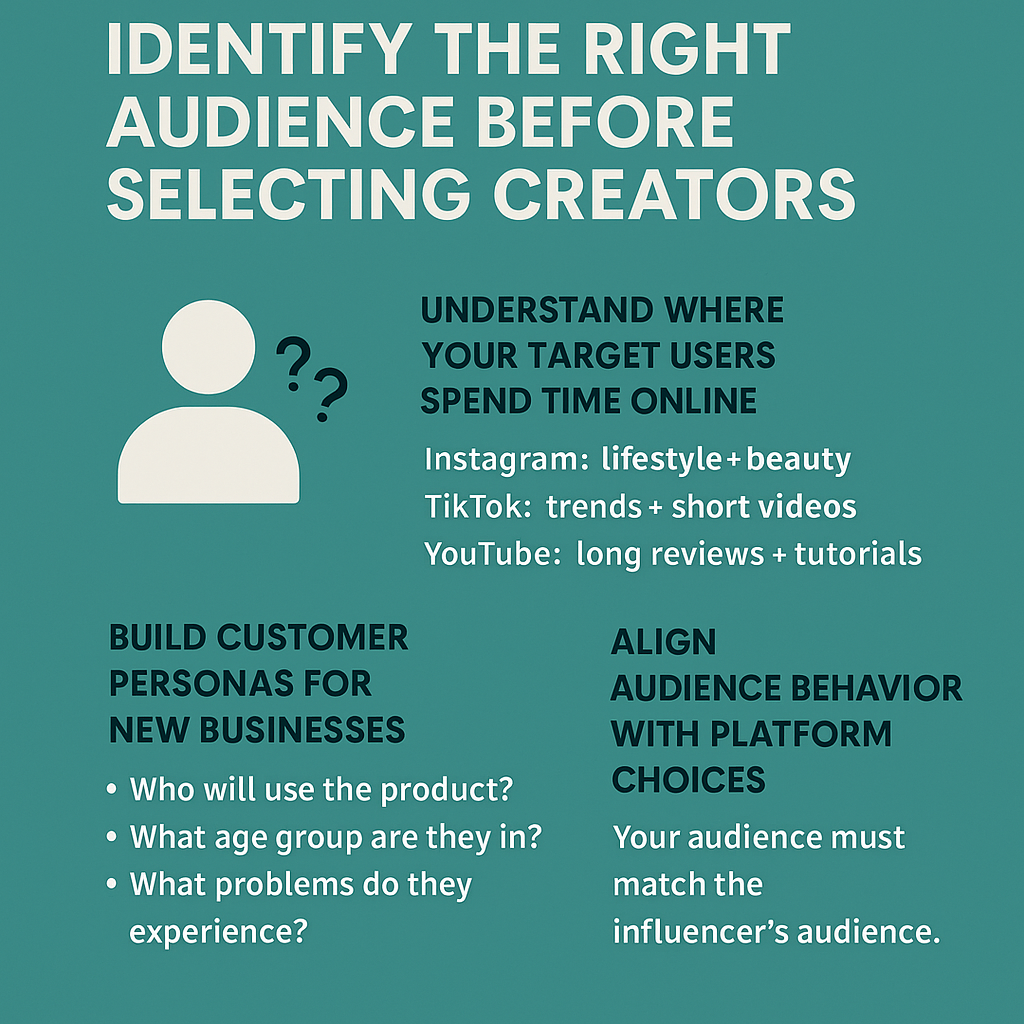
Build Customer Personas For New Businesses
Ask yourself:
- Who will use the product?
- What age group are they in?
- What problems do they experience?
- What platforms do they prefer?
These questions help startups target the people most likely to convert.
Understand Where Your Target Users Spend Time Online
Platform choice influences which creators you should work with.
For example:
- Instagram: lifestyle + beauty
- TikTok: trends + short videos
- YouTube: long reviews + tutorials
Choosing the right platform improves results and reduces wasted resources.
Align Audience Behavior With Platform Choices
Your audience must match the influencer’s audience. A fitness creator cannot promote an educational app. A traveler cannot promote a gaming device. Alignment drives strong engagement.
Step 3 — Find the Best Creators Using Micro-Influencer Marketing for Startups
Micro-influencer marketing for startups works better than using mega creators in most cases. Micro-influencers have smaller audiences but higher trust. Their communities feel more real and more engaged.
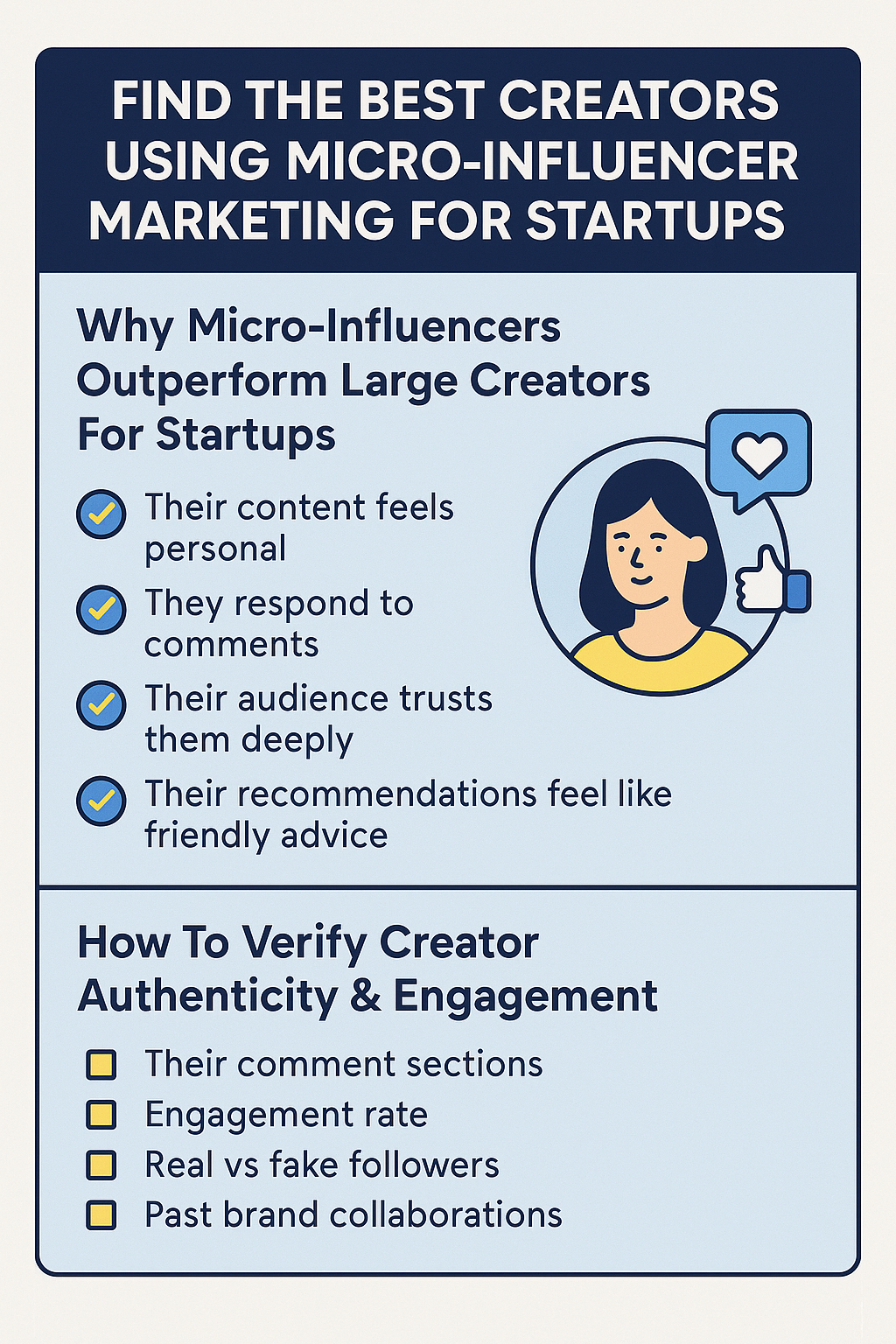
Why Micro-Influencers Outperform Large Creators For Startups
Micro-influencers deliver stronger engagement because:
- Their content feels personal
- They respond to comments
- Their audience trusts them deeply
- Their recommendations feel like friendly advice
Later reports that micro-influencers achieve stronger engagement compared to larger influencers (Source: https://later.com). This is ideal for startups.
How To Verify Creator Authenticity & Engagement
Check:
- Their comment sections
- Engagement rate
- Real vs fake followers
- Past brand collaborations
These checks help protect your startup from scams or low-quality creators.
Tools Recommended By Expert Agencies For Influencer Vetting
Common tools include:
- Modash
- Upfluence
- Tagger
- HypeAuditor
These tools help ensure that influencer marketing for startups stays accurate and data-driven.
Step 4 — Build Influencer Partnerships for Startups (Outreach & Negotiation)
Influencer partnerships for startups work best when done respectfully. Creators appreciate brands that understand their style, audience, and creative approach.
How To Craft A Personalized Outreach Message
A good outreach includes:
- Genuine appreciation
- Clear explanation of the product
- Why the collaboration makes sense
- Simple, friendly tone
Personalized messages always produce better responses.
Negotiating Pricing, Deliverables & Usage Rights
Discuss openly:
- Content format
- Deadlines
- Video or image requirements
- Usage rights for ads
- Payment or gifting details
Clear communication prevents misunderstandings later.
Choosing Between Gifting, Paid, Affiliate, And Hybrid Deals
Startups benefit from flexible collaboration types:
- Gifting: lowest cost
- Paid: guaranteed content
- Affiliate: performance-based
- Hybrid: combination of all
This approach supports long-term Influencer Marketing for Startups.
Step 5 — Create a Cost-Effective Influencer Marketing for Startups Content Plan
A strong content plan helps your startup get consistent results. This step is essential when building cost-effective influencer marketing for startups because content must flow smoothly from strategy to execution.
Designing A Startup-Friendly Content Workflow
A simple workflow makes everything easier:
- Write a brief
- Send the product
- Collect the creator’s ideas
- Approve drafts
- Schedule posts
This reduces confusion and helps creators deliver on time.
Organic + Paid Amplification Strategy
Even the best creators sometimes need support from small boosts. A $20 boost on Instagram or TikTok can help your influencer content reach new customers. This is especially useful in Influencer Marketing for Startups because new brands need the extra visibility.
Repurposing Influencer Content Into Ads, Landing Pages & Email
Once you get content, you should reuse it. Influencer videos, testimonials, and images can be used in:
- Social ads
- Landing pages
- Email newsletters
- Website hero sections
Repurposing increases the value you get from every creator.
Step 6 — Launch the Campaign & Track Real-Time Performance
This step turns your strategy into action. Influencer marketing for new businesses works best when you monitor results closely. You will learn how users respond, which creators perform well, and what type of content converts.
Essential Metrics For Startup Influencer Marketing
Track:
- Engagement
- Link clicks
- Traffic
- Conversions
- App installs
- Promo code usage
These metrics show whether your content is reaching the right people.
Monitoring Conversions, Link Clicks, Installs, Or Traffic
Creators use links in their bios, comments, or stories. Measure each one to understand which creator brings the most value. This helps improve your startup influencer strategy.
How To Adjust Campaigns Mid-Way
If something does not work, you can adjust the:
- CTA
- Format
- Time
- Caption
- Angle
Small changes often improve campaign performance.
Step 7 — Optimize Your Startup Influencer Strategy With Data
Optimization helps startups turn one-time results into long-term growth. This step ensures Influencer Marketing for Startups becomes stronger with every campaign.
A/B Testing Creators, CTAs, Captions & Formats
You can test:
- Two creators
- Two hooks
- Short videos vs long videos
- Text overlays
- Thumbnails
Testing helps discover which content your audience loves most.
Improving Cost Per Acquisition (CPA)
Startups often struggle with high CPA. But micro-influencer marketing for startups usually reduces this cost because their followers trust them more.
Using AI-Based Analytics Tools For Deeper Insights
AI tools can show:
- Which creators drive the best ROI
- Which formats convert best
- Which platforms produce sales
- Which audiences respond most
This transforms Influencer Marketing for Startups into a data-backed system.
Step 8 — Scale Your Influencer Marketing for Startups Across Markets
Scaling is where brands grow beyond small tests. Once your influencer campaigns perform consistently, you can expand to more creators, more regions, and more platforms.
When Your Startup Should Move From Micro To Mid-Tier Creators
You can scale when:
- Your product-market fit is strong
- Your conversions are stable
- You have clear proof of what works
Mid-tier creators bring bigger reach but require stronger planning.
Testing New Platforms (TikTok, YouTube Shorts, LinkedIn)
Each platform has unique advantages for Influencer Marketing for Startups:
- TikTok → viral growth
- YouTube Shorts → tutorials
- LinkedIn → B2B startup influencer marketing
These platforms open new doors for brand discovery.
Building Long-Term Ambassador Relationships
When a creator performs well, keep them long term. Ambassadors create deeper trust, which matters for influencer partnerships for startups.
Budgeting for Startup Influencer Marketing
Goviral noted that 86% of marketers say they use influencer marketing in 2025. Budget is a concern for every new business. But influencer marketing for new businesses is flexible and can be adapted to almost any financial level. Data collected by AWISEE shows that 70% of Canadian consumers discover new products via influencers.
Average Startup-Friendly Influencer Rates
- Nano influencers → Mostly gifting
- Micro influencers → $50–$150
- Mid-tier creators → $200–$700
These ranges help plan a practical budget.
Free, Low-Cost & Scalable Options
Startups can also use:
- Gifting
- Affiliate deals
- Commission-based partnerships
- UGC creators
- Performance bonuses
This makes cost-effective influencer marketing for startups easy to execute.
How To Forecast ROI Realistically
Calculate ROI using:
- Total cost
- Total conversions
- Total revenue
This helps plan future campaigns better.
Influencer Marketing for Startups works best when it becomes a long-term ecosystem instead of a one-time activity. Startups that focus on clear strategies, audience alignment, strong content plans, and sustainable partnerships grow faster. They build credibility, attract new buyers, and stay visible across platforms. With the right approach, any startup can use influencer marketing to scale in 2026.
Get Expert Influencer Support for Startup Growth
Influencer Marketing for Startups becomes far more powerful with expert guidance. AWISEE provides end-to-end services covering influencer scouting, vetting, negotiation, and campaign execution.