
Not long ago, political messaging relied on door-knocking volunteers, televised debates, and printed leaflets. But in 2025, your favorite YouTuber might be the one reminding you to register to vote.
This isn’t just a digital trend—it’s a strategic communication revolution. In 2025, influencer marketing for political campaigns has become a core outreach tool—reshaping how messages reach voters digitally. As social trust shifts from traditional media to digital creators, political strategists are following audiences into their feeds. It’s faster, more personal, and undeniably effective.
From Twitch streamers to TikTok comedians, social media creators in election campaigns are redefining what political engagement looks like, especially for first-time voters.
Types of Influencers in Political Advertising
Influencers are no longer just background voices in political conversations—they’re active participants.
Here’s how influencers in political advertising are contributing to modern campaigns:
- Candidate endorsements: Some creators officially back politicians, especially when they align on social or economic values. These endorsements are powerful—but risky if audiences feel the support isn’t genuine.
- Issue-based campaigns: Many creators focus on specific causes, such as reproductive rights, environmental reform, or internet freedom. These campaigns build long-term momentum and trust.
- Myth-busting: In the age of misinformation, creators are stepping in to correct misleading narratives with humor, facts, and fast-paced delivery.
- GOTV (Get Out The Vote): Whether partisan or neutral, influencers excel at rallying people to register, check deadlines, and show up on election day.
This diversity in role makes influencer marketing for political campaigns an indispensable part of digital electioneering strategies.
Influencer Campaign Types in Politics (2024–25)

This pie chart shows the share of different influencer roles in political campaigns:
- GOTV Drives – 30%
- Candidate Endorsements – 35%
- Issue-Based Advocacy – 25%
- Misinformation Correction – 10%
Influencer Marketing for Political Campaigns: Finding the Right Creators
AWISEE provides end-to-end influencer solutions for political campaigns. Whether it’s building awareness or driving voter turnout, we match the right digital creators to your campaign goals.
From endorsements to myth-busting, We helps you:
- Identify the ideal influencer type
- Align creators with your narrative
- Track real-time results
Let’s make your message count where it matters.

Why Influencer Marketing for Political Campaigns is Surging in 2025
Let’s face it—Gen Z isn’t watching cable news to shape their political views. They’re watching Reels, liking TikToks, and sharing commentary from creators they already trust.
That’s why as part of broader social impact influencer campaigns, influencer marketing for political campaigns has gained significant momentum in 2025.
- Peer-to-peer persuasion: A friend’s opinion matters. And for many, creators feel like friends, especially those who reflect their values and lived experiences.
- Creator credibility: Followers listen because creators speak directly and authentically. When influencers take a stance or demystify policies, their communities take notice.
- Real-time communication: Gone are the days of waiting for newspaper coverage. Creators can now lead digital advocacy by reacting, explaining, and rallying within minutes of an event.
This is how campaign outreach with content creators has evolved from an experiment into an essential pillar of modern election strategy.
To better understand the impact of Social media and specially TikTok among the people, you need to read how TikTok usage varies across countries in 2025.
Case Study: Influencers in the 2024 U.S. Presidential Campaign
The 2024 U.S. presidential election marked a turning point in the use of digital creators. From explainer videos to campaign challenges, influencers played a central role in narrative shaping.
- Micro vs. Macro Influencers: While big names generated buzz, micro influencers in public campaigns (under 100K followers) consistently saw better engagement due to stronger community trust. Their smaller communities trusted them more and listened closely.
- Platform dynamics: TikTok dominated for short, reactive content, while YouTube Shorts and Instagram Reels became hubs for issue explainer series and Q&A sessions.
- Mixed public sentiment: Some creators faced backlash for endorsing candidates that clashed with their usual content. Others gained massive support for taking brave political stands. The key takeaway? Authenticity wins.

It became clear that the role of influencer partnerships in shaping political narratives online wasn’t incidental. It was intentional, strategic, and here to stay.
Paid Endorsements vs. Organic Support: What Builds Credibility?
One of the most delicate aspects of influencer marketing for political campaigns is striking a balance between strategic funding and perceived sincerity. While paid partnerships allow campaigns to structure messaging, they can also erode the very authenticity that gives influencers their impact.
What’s at stake?
- Disclosure ethics: Federal laws and platform rules mandate that paid political content must be transparently labeled. Yet even a simple tag like “Paid Partnership” can alter audience perception, sometimes drastically.
- Fan backlash: Followers are adept at spotting content that feels inauthentic. In 2024, several influencers in political advertising faced backlash for promoting candidates misaligned with their past positions or audience expectations.
- Creators saying no: Interestingly, some digital creators have declined large sums to preserve audience trust. A notable mental health YouTuber turned down a campaign from a candidate with a conflicting healthcare stance, underscoring the importance of authentic creator partnerships for health campaigns.
Authenticity is political currency. Often, creators who maintain independence resonate more deeply than those on a campaign payroll.

Legal Guidelines for Influencers in Political Campaigns
As influencer involvement expands, social media creators in election campaigns must navigate an increasingly complex regulatory landscape. The rules vary by jurisdiction, platform, and content type.
Key regulations include:
- FEC guidelines: In the U.S., the Federal Election Commission governs how political money is spent, especially when influencers receive campaign or PAC funding.
- FTC disclosures: The Federal Trade Commission requires influencers to clearly disclose all paid promotions, including political messaging, using terms like #ad or “Paid Partnership.”
- Platform policies: TikTok bans all paid political ads. Meta (Facebook and Instagram), by contrast, allows them but only after identity verification and transparent placement in an ad archive.
In 2022, multiple videos featuring social media creators in election campaigns were removed for misinformation or lack of disclosure. Legal compliance protects not only reputations—but credibility.
Campaign Outreach with Content Creators: Structuring a Political Influencer Strategy
Well-executed campaign outreach with content creators involves more than just sending a DM. It’s a strategic process built on data, trust, and timing.

What this process typically includes:
- Influencer selection: Based on alignment with campaign values, demographic reach, and engagement metrics.
- Creative direction: While campaigns offer messaging frameworks, successful partnerships allow influencers creative freedom to communicate in their own voice.
- Publishing and performance tracking: Posting schedules are aligned with key electoral dates (e.g., registration deadlines), and campaigns use analytics to optimize reach and engagement.
Many political teams now work with agencies that specialize in influencer marketing for political campaigns, blending regulatory expertise with content fluency.
Voter Engagement Through Digital Influencers: Gen Z & Millennials
Young voters are a unique audience. They distrust institutions, resist overt messaging, and respond to storytelling. That’s why voter engagement through digital influencers has become a leading tactic for youth voter turnout.
According to a 2024 Nielsen report, 68% of Gen Z voters said they were more likely to learn about an issue or candidate after seeing an influencer post about it. The reasons are clear:
- Emotional connection: Influencers often share personal stakes—mental health, identity, student debt—that resonate with younger audiences.
- Platform-native content: They design messages for the scroll, not the soapbox. This makes it easier to digest and more likely to be shared.
- Rejection of political polish: Authenticity is key. A TikTok recorded in someone’s bedroom carries more weight than a professionally filmed political ad.
How political campaigns are using influencers to boost youth voter turnout isn’t just a tactic—it’s a necessity.
Boost Youth Voter Turnout with Creator Campaigns
AWISEE specializes in influencer marketing for political campaigns aimed at younger audiences. We help you reach Gen Z and Millennials using the platforms they trust—TikTok, Instagram, and YouTube.
Talk to us about ethical, effective partnerships. Schedule your consultation today at AWISEE.
Role of Influencer Partnerships in Shaping Political Narratives Online
Influencer engagement is not just about election-day posts. In fact, the role of influencer partnerships in shaping political narratives online often unfolds months before a vote is cast.
These partnerships help:
- Set trends, not just agendas: From memes to explainers, creators shape what issues people talk about—and how they talk about them.
- Foster community-based civic engagement: Influencers cultivate digital spaces where followers learn, debate, and align politically.
- Accelerate message virality: A single meme or 30-second Reel can sometimes outperform a multimillion-dollar ad campaign in visibility and cultural impact.
These creators aren’t just promoting messages—they’re building political subcultures in real time.
Crisis Management in Political Influencer Campaigns
What happens when things go off-script?
Influencer partnerships bring visibility—but also risk. A poorly timed post, a resurfaced controversy, or a misunderstood message can create digital firestorms.
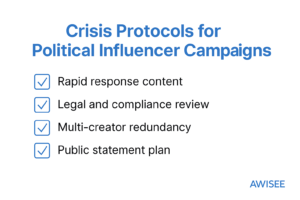
In 2024, one TikTok creator was abruptly dropped from a state campaign after a controversial clip from 2021 resurfaced. The campaign paused its influencer activities for a week, restructured its content plan, and resumed with adjusted messaging.
The lesson? Influencer marketing for political campaigns is powerful—but fragile. Preparation and adaptability are not optional—they’re essential.