

Influencer marketing for food beverage brands has become essential for how people discover what to eat, what to drink, and which restaurants deserve attention. Today’s audience trusts creators more than ads because influencer marketing for food beverage brands feels real and human. People want to watch honest reactions, simple tasting videos, and real meals instead of polished photography. That is why influencer marketing for food beverage brands now drives viral food trends, drink reviews, and restaurant decisions.
Platforms like TikTok, Instagram Reels, and YouTube Shorts allow any dish or drink to gain massive reach. One creator can make a local restaurant famous overnight. This is why influencer marketing for food beverage brands is now a core strategy for global companies, cafés, beverage labels, bakeries, and restaurant chains. Everyone is using food influencer marketing, beverage influencer marketing, and restaurant influencer marketing to stay relevant.
This article explains why influencer marketing for food beverage brands continues to grow and how brands can apply these strategies in 2026.
Influencer Partnerships For Food Beverage Brands: What Works Best?
Dash noted that 84% of brands say they believe influencer marketing to be effective. Influencer partnerships for F&B brands work well when content feels natural and not overly scripted.
Sponsored Recipes & Ingredient Integrations
Creators demonstrate how products fit into daily cooking.
Taste Tests, Honest Reviews & First Impressions
Authenticity drives stronger trust.
Limited-Time Menu Promotions & Seasonal Drops
Creators promote:
- Valentine specials
- Summer drinks
- Holiday meals
Long-Term Ambassador Programs For F&B Brands
These programs create consistent brand visibility.
F&B Event Collaborations & Pop-Ups
Event attendance boosts local and national attention.
Boost Your F&B Brand With the Best Influencer Marketing Services
AWISEE offers the best food beverage influencer marketing services to help your brand reach hungry, curious, and engaged audiences.
Start influencer marketing for food beverage brands with AWISEE
How To Build A Successful Influencer Marketing for Food Beverage Brands
Influencer marketing for food beverage brands succeeds when brands keep the process simple.
Set Your Objective & Audience
A brand should clearly decide whether it wants:
- More reservations
- Higher sales
- Better awareness
- More online orders
Clear objectives support a strong F&B influencer strategy.
Choose The Right Influencer Type
Different creators produce different results:
- Recipe creators → ingredient usage
- Restaurant vlogs → foot traffic
- Beverage creators → drink promotions
- Wellness creators → healthy options
Develop A Creative Brief (Recipes, Reviews, Tastings)
A clear brief helps creators stay on message. It should include:
- Key talking points
- Required dishes or drinks
- Video format
- Publishing schedule
- Tracking links
Track ROI: Engagement, Visits, Sales
Brands often track:
- Engagement
- Clicks
- Reservations
- Promo code usage
- Google Maps activity
How Food Influencer Marketing Shapes Purchase Decisions Today
Food influencer marketing changes how people decide what to eat or drink. The reason is simple. Creators feel relatable. Their kitchens look real. Their reactions feel honest. Their recipes feel possible for everyday people.
Emotional + Visual Appeal In Food & Beverage Content
Food content triggers emotion quickly. A crunch, bite, pour, or sizzle pulls people in. A short clip can make them curious or hungry even if they were not planning to eat.
Why Food Content Performs Well On Instagram, TikTok & YouTube
These platforms are built for fast and satisfying content. People enjoy:
- Quick step–by–step recipes
- POV reactions
- Street food reviews
- Drink hacks
- ASMR cooking
Why Consumers Trust Creator-Driven Tastings, Reviews & Recipes
Creators review food like a normal person. They show mistakes and honest feedback. That level of authenticity helps influencer marketing for food beverage brands outperform scripted ads.
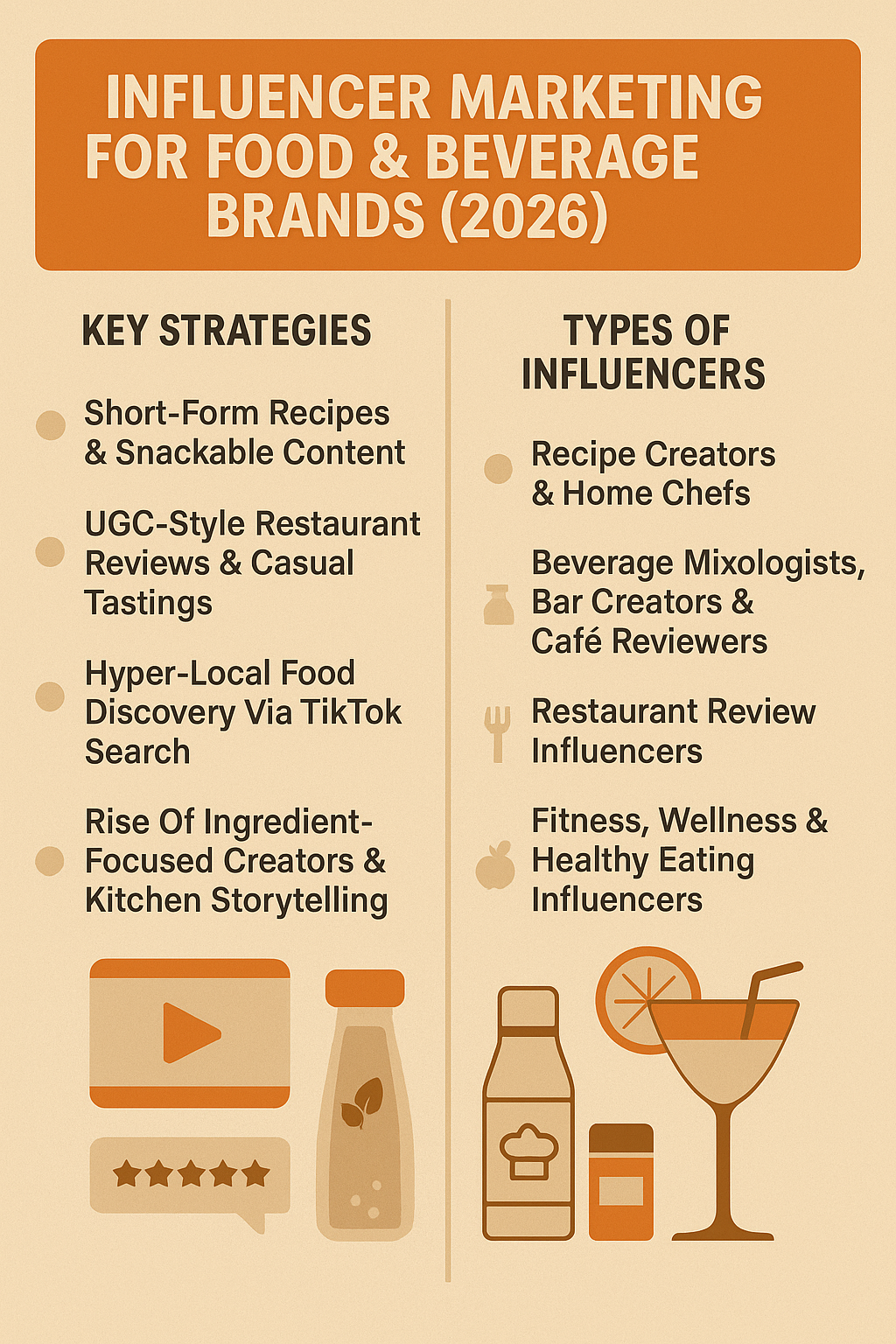
Key F&B Influencer Strategy Trends Every Brand Must Know In 2026
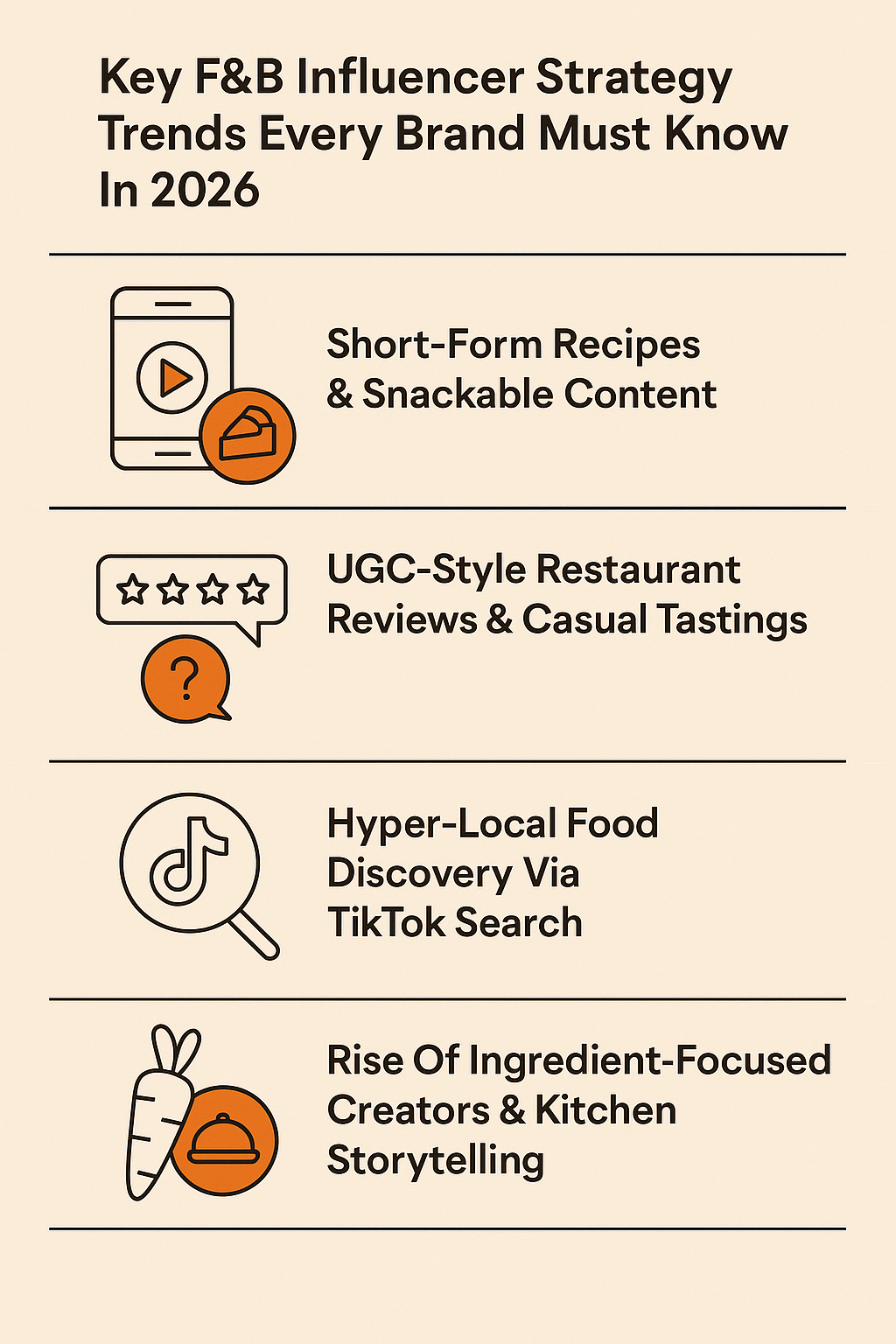
F&B influencer strategy keeps changing. In 2026, new patterns are shaping how brands work with creators.
Short-Form Recipes & Snackable Content
People want recipes they can watch in under 30 seconds. The faster it is, the easier it feels.
UGC-Style Restaurant Reviews & Casual Tastings
Viewers prefer casual and unedited food reactions. They want to hear:
- “Is it spicy?”
- “Is it too sweet?”
- “Would I order it again?”
These small details influence real purchase decisions.
Rise Of Ingredient-Focused Creators & Kitchen Storytelling
These creators talk about:
- Ingredients
- Cooking techniques
- Flavor combinations
This increases trust and authority.
Types Of Food & Beverage Influencers Brands Should Partner With
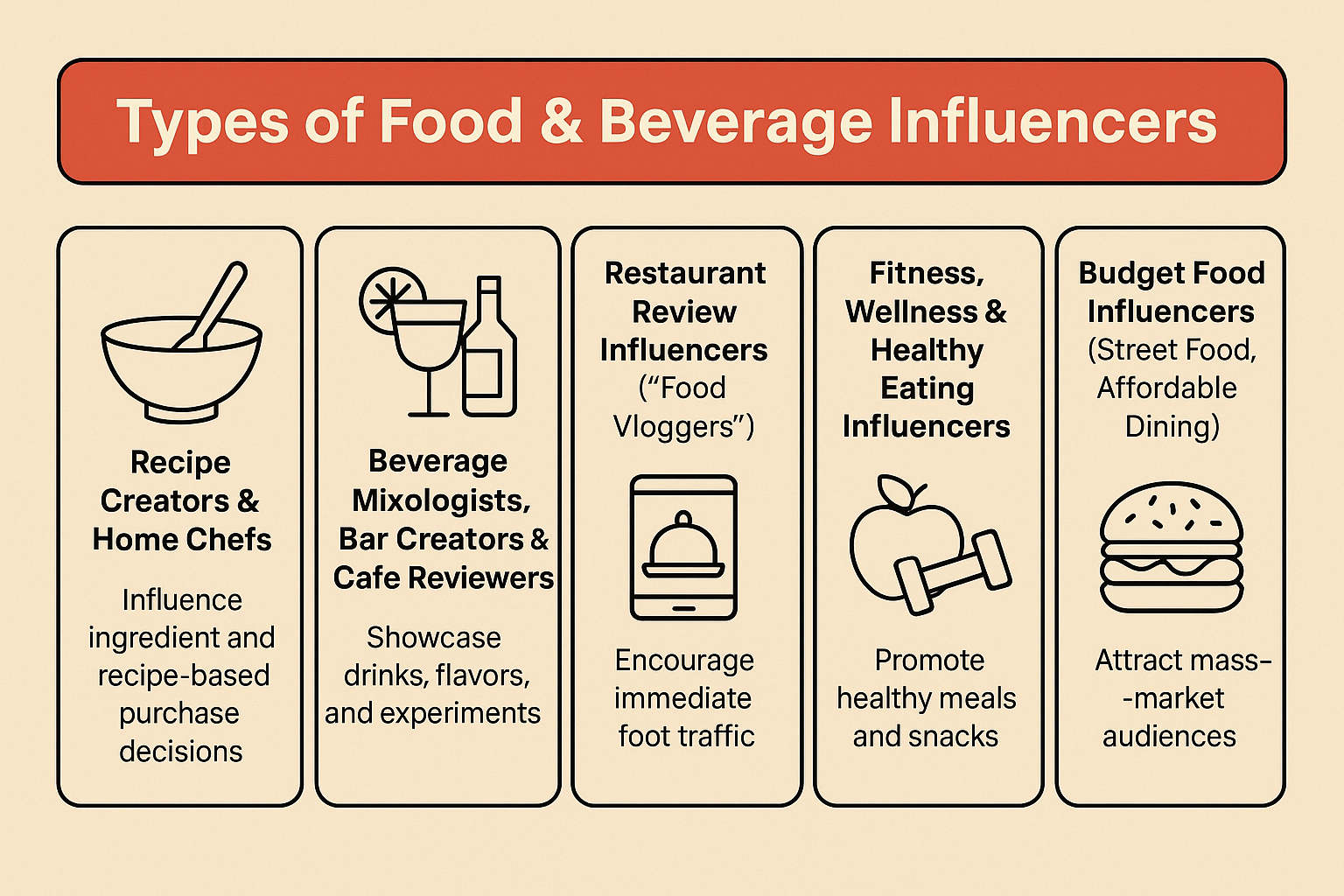
Influencer marketing for food beverage brands depends on choosing the right creators.
Recipe Creators & Home Chefs
They create natural opportunities for food influencer marketing. They influence ingredient and recipe-based purchase decisions.
Beverage Mixologists, Bar Creators & Café Reviewers
These creators drive beverage influencer marketing by showcasing drinks, flavors, and experiments.
Restaurant Review Influencers (“Food Vloggers”)
They encourage immediate foot traffic. Their reactions simplify decision-making.
Fitness, Wellness & Healthy Eating Influencers
They promote:
- Healthy meals
- Low sugar drinks
- High–protein snacks
Budget Food Influencers (Street Food, Affordable Dining)
They help restaurants attract mass–market audiences looking for cheaper options.
Restaurant Influencer Marketing: How Restaurants Use Creators To Drive Foot Traffic
Restaurant influencer marketing is becoming mainstream for local growth.
Local Food Tour Creators & Micro-Reviewers
They help new restaurants appear on people’s “must visit” lists.
How Restaurants Use TikTok For Peak-Time Footfall
Posting around lunch and dinner boosts real-time traffic.
What Type Of Content Drives Reservations?
The strongest formats:
- POV tastings
- Behind-the-scenes cooking
- “Trying this restaurant today” videos
“Behind-The-Kitchen” Content For Authenticity
People love watching how dishes are prepared. It builds transparency and trust.
How To Find Local Food Influencers?
One of the most common questions in influencer marketing for food beverage brands.
Using TikTok Search & Location Tags
Searching phrases like:
- “Food near me”
- “Best cafés in [city]”
helps find local creators.
Instagram Geotags + Explore Page
Checking tagged photos reveals potential creators.
Finding Local Restaurant Marketing Influencers On YouTube & Reels
YouTube search also works well for restaurant marketing influencers.
Using Influencer Platforms & UGC Marketplaces
Platforms include:
- Aspire
- Grin
- Upfluence
- Collabstr
Partnering With Food Bloggers & Local Review Pages
These communities already know the local creator network.
Platform Breakdown: Where Food & Beverage Content Performs Best
Influencer marketing for food beverage brands depends a lot on platform behavior. Each platform pushes content differently, and that changes the results brands get.
TikTok: Viral Recipe Trends, Reviews & Local Food Discovery
TikTok is one of the strongest platforms for influencer marketing for food beverage brands. The app boosts short recipes, drink experiments, street food reviews, and fast reactions. People enjoy quick videos that feel real and unfiltered.
Instagram: Reels, Food Photography & Brand Aesthetics
Instagram supports food influencer marketing through visuals. Reels, Stories, and clean food photos help brands build an identity. Many restaurants and cafés depend on Instagram to display ambiance, colors, and plate styling.
YouTube: Long-Form Reviews, Storytelling & Recipe Demonstrations
YouTube works best for longer storytelling. People want to hear explanations, detailed reviews, step-by-step cooking, and honest restaurant tours. Influencer partnerships for F&B brands work very well here because creators have more time to explain taste and texture.
Pinterest: Meal Ideas & Seasonal Cooking
Pinterest helps users find:
- Meal inspiration
- Seasonal recipes
- Healthy food ideas
- Holiday cooking plans
For brands targeting families or home cooks, influencer marketing for food beverage brands can also include Pinterest creators.
What Makes Food Content Go Viral In 2026?
Viral content usually follows simple sensory rules. That is why food influencer marketing and beverage influencer marketing perform so well.
Sensory Triggers: Texture, Satisfying Cuts, Pour Shots
People enjoy texture. A cheese pull or a sizzling sound makes them stop scrolling. Influencer marketing for food beverage brands benefits from these moments because they increase watch time.
POV Eating, ASMR & Bite Reactions
POV eating makes the viewer feel like they are part of the experience. ASMR adds comfort and curiosity.
Ingredient Curiosity: “What Is That?”
Unusual ingredients or surprising combinations grab attention quickly.
The Role Of Trending Sounds & Memes
When creators use trending sounds with food, the content moves faster in the algorithm.
Compliance, Food Safety & Ethical Guidelines For F&B Influencer Marketing
Authenticity and safety matter in influencer marketing for food beverage brands.
Disclosure & Transparency
Creators must mention that a video is sponsored. This protects trust.
Health Claims & Regulatory Restrictions
Brands must avoid making claims that require scientific proof, such as:
- “Boosts immunity”
- “Reduces stress”
Accuracy In Ingredient & Nutritional Representation
Creators must show the real product and real ingredients. Honest visuals protect long-term trust.
Cost Of Food Influencer Marketing: Budgets, Rates & Hidden Costs
Costs can shift depending on region, platform, and creator size.
Micro Vs Macro Creator Pricing
General ranges include:
- Micro creators: $100–$600 per post
- Macro creators: $1,000–$10,000+ per post
Cost Of Recipe Production & Grocery Expenses
Many creators include:
- Ingredient costs
- Production tools
- Kitchen equipment
- Filming expenses
Restaurant Visit Compensations
Restaurant marketing influencers often expect:
- Free meals
- Travel reimbursement
- A content fee
Future Predictions: What F&B Influencer Marketing Will Look Like In 2026–2027
Influencer marketing for food beverage brands will continue changing with technology and culture.
AI Food Creators & Synthetic Food Videos
AI-generated food content will increase. Some brands may even use AI avatars to display new products.
Sustainable & Ethical Eating Influencers
People care more about health and sustainability. Influencers focusing on zero-waste cooking, ingredient transparency, and ethical sourcing will grow faster.
Virtual Food Tastings Via AR
Restaurants may start using AR menus and virtual tastings promoted by creators.
Mintel noted that the Functional beverages market was valued at USD 168.3B in 2025, projected to reach USD 296.7B by 2034 (CAGR 6.5%). Influencer marketing for food beverage brands is now a key part of food discovery. People want honest reactions, real meals, natural drinks, and simple storytelling. As per AWISEE, “The food and beverage sector has always been shaped by taste and tradition, but in 2025, marketing decides who thrives.”
To succeed in 2026, brands should focus on:
- Working with the right creator types
- Posting short and simple videos
- Using real reactions
- Targeting local audiences
- Staying consistent
- Following regulations
- Adapting to new trends
Influencer marketing for food beverage brands continues rising because food is emotional, direct, and universal. Every reaction, every bite, and every sip tells a story—and creators know how to share it.
Turn Recipes, Reviews & Tastings Into Real Sales
AWISEE specializes in influencer marketing for food beverage brands, helping you convert views into reservations, orders, and loyal customers.