

Fast fashion statistics help explain something bigger than clothing trends. They show how a global industry now shapes consumer behavior, environmental damage, and labor conditions at scale. Fast fashion is no longer just a retail category. It has become a system that influences how often people buy clothes, how long those clothes are worn, and how quickly they are discarded.
Looking closely at fast fashion statistics removes guesswork. Numbers reveal volume. Numbers show acceleration. And in 2025, the scale revealed by fast fashion industry data is impossible to ignore. This article breaks down fast fashion statistics 2025, covering fast fashion market size, consumption behavior, environmental impact, and labor realities using verified sources only.
Fast Fashion Market Size and Industry Scale (2025)
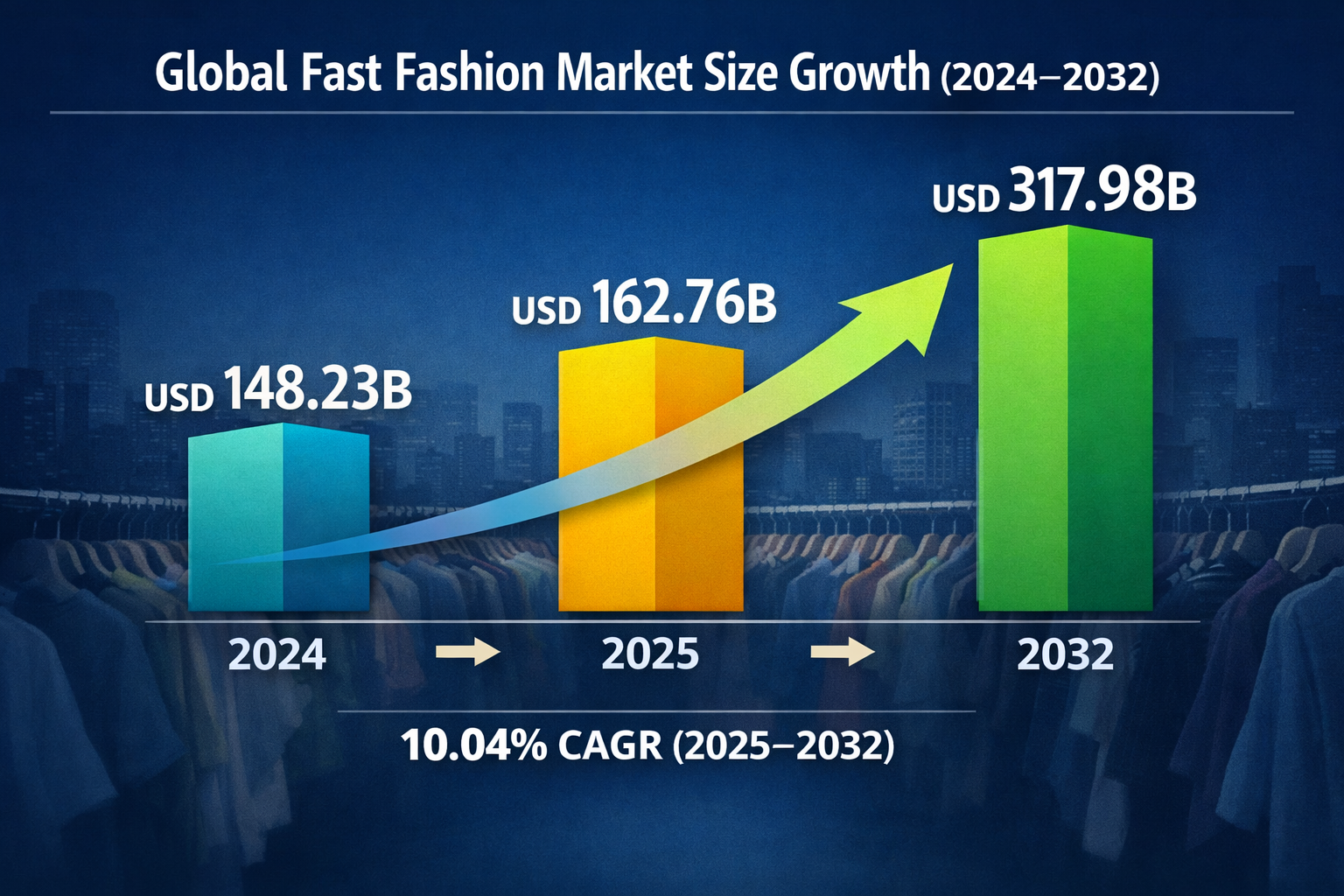
Fast fashion statistics show that the industry has grown into a major economic force. In 2024, the global fast fashion market size reached USD 148.23 billion. According to Fortune Business Insights by 2025, it is projected to rise to USD 162.76 billion. Long-term forecasts estimate the market will reach USD 317.98 billion by 2032, reflecting a 10.04% CAGR between 2025 and 2032.
Global Fast Fashion Market Size Growth (2024–2032)
USD 148.23B (2024) → USD 162.76B (2025) → USD 317.98B (2032)
Fast Fashion Growth Statistics Compared to National Economies
Bigfrenchies reported that when measured as a national GDP, the fashion industry ranks as the 7th largest economy globally, with an estimated value of $2.4 trillion. This places fashion ahead of many major countries and highlights why fast fashion growth statistics matter far beyond retail.
Turn Fast Fashion Data Into Real Market Impact
AWISEE offers fast fashion influencer marketing services that help brands translate industry data into creator strategies that drive visibility, engagement, and sales at scale.
Fast Fashion Industry Data by Region
Fast fashion industry data shows clear regional dominance. Asia Pacific leads the global fast fashion market. In 2024, the region accounted for 34.67% of global market share.
This dominance is driven by:
- Large middle-class populations
- Rising disposable income
- Manufacturing hubs in China, India, Bangladesh, and Vietnam
Asia Pacific fast fashion market value increased from USD 46.46 billion in 2023 to USD 51.39 billion in 2024.
What Fast Fashion Means in 2025
Fast fashion refers to clothing that is produced rapidly, sold cheaply, and designed to follow short-lived trends. The goal is speed. Products are pushed from design to store shelves in days rather than months.
Key characteristics of the fast fashion model include:
- Rapid mass production
- Low price points
- Trend-driven design cycles
- Short garment lifespans
Ultra-fast fashion brands now release thousands of new products every week. This production speed did not exist two decades ago. It is one of the most important fast fashion industry insights shaping today’s apparel economy.
Fast Fashion Industry Facts on Clothing Consumption
Fast fashion statistics reveal a dramatic rise in clothing consumption. In the mid-1990s, Americans purchased an average of 28 garments per year. By 2018, that number had increased to 68 garments annually.
That is more than double in just over two decades.
- Average Garments Purchased Per Person – 28 items (1990s) → 68 items (2018)

Garment Lifespan Keeps Shrinking
Buying more does not mean wearing more. Many fast fashion items are worn only seven times before being discarded. This happens not because garments are damaged, but because trends expire quickly.
This behavior sits at the core of many fast fashion industry facts related to waste and overproduction.
Best Colorful Socks noted that average fast fashion garment lifespan is discarded after ~7 wears
Clothing Waste Is Rising Fast
Fast fashion statistics also show rising disposal rates. The average American throws away 81.5 pounds of clothing per year. In 2016 alone, Americans discarded 14 million tons of clothing, double the volume from twenty years earlier.
Fast Fashion Statistics 2025: Environmental Impact
Fast fashion contributes approximately 10% of global CO₂ emissions. This is more than international flights and maritime shipping combined. These fast fashion statistics 2025 place apparel among the most polluting industries worldwide.
Fast Fashion and Water Consumption
Fast fashion industry data shows that fashion is the second-largest consumer of water globally.
Water Usage in Garment Production
- Jeans: ~2,000 gallons
- Shirt: ~700 gallons
Freshwater Pollution from Fashion
The fashion industry is responsible for 20% of global freshwater pollution, primarily due to textile dyeing and chemical finishing processes.
Polyester and Synthetic Fibers: The Hidden Environmental Cost
Fast fashion statistics show that polyester sits at the center of modern apparel production. It is cheap, flexible, and easy to scale. That is exactly why fast fashion depends on it.
But cheap fibers carry long-term costs.
Polyester Dominates Fast Fashion Production
Around 60% of all garments produced globally are made using polyester. This share has increased sharply since 2000, mirroring the rise of fast fashion market size worldwide.
Polyester and Carbon Emissions
Polyester is three times more carbon-intensive than cotton. It is derived from fossil fuels, making production heavily dependent on oil extraction and refinement.
This is one of the most overlooked fast fashion industry facts.
Microplastic Pollution from Fast Fashion
Fast fashion statistics also reveal a growing microplastic problem. Up to 35% of microplastics in the world’s oceans come from fashion-related sources. Polyester alone contributes 73% of textile microplastic pollution. These fibers enter oceans through washing and wastewater systems.
Polyester Waste and Decomposition
Polyester garments do not break down quickly. In landfills, they take 20 to 200 years to decompose. This long lifespan explains why fast fashion industry data consistently shows rising landfill pressure.
Fast Fashion Waste and Recycling Statistics
Fast fashion statistics highlight the scale of textile waste. Around 85% of textiles produced globally end up in landfills or incinerators.
- Global Textile Waste Volume: ~92 million tons annually
Recycling Rates Remain Extremely Low
Despite sustainability messaging, recycling remains ineffective. Less than 1% of used clothing is recycled into new garments. Most items are downcycled or destroyed.
This gap defines many fast fashion industry insights related to circular fashion.
Economic Value Lost Due to Waste
Waste is not only environmental. It is economic.
- Annual Value Lost from Clothing Waste: $500 billion per year
The Human Cost of Fast Fashion
Fast fashion statistics are not just about numbers. They are about people.
And the human cost is significant.
Wages in the Garment Industry
Only 2% of garment workers globally earn a living wage. In Bangladesh, workers earn around $96 per month, while the estimated living wage ranges from $334 to $403 per month.
Forced and Child Labor Statistics
A U.S. Department of Labor report found evidence of forced or child labor in garment supply chains across:
- Bangladesh
- India
- China
- Vietnam
- Brazil
- Turkey
- Thailand
Countries with Documented Garment Labor Violations
Physical Toll on Workers
Fast fashion growth statistics also reflect production pressure. In one study of garment factories in India:
- 33% of female workers fainted at work
- 28% required glucose drips within a single year
Fast Fashion Consumer Behavior Statistics
Fast fashion statistics show that awareness does not always change behavior.
- 72% of Americans are aware of the sustainability issue
- 55% want to buy more sustainable clothing
- 48% do not know where to find it
Consumer Awareness vs Accessibility
High awareness, low clarity
Gen Z and Fast Fashion Contradictions
Up to 94% of Gen Z consumers say they support sustainable fashion. Yet many still shop fast fashion frequently. Price, speed, and social trends continue to dominate decisions.
Role of Social Media and Influencers
Platforms like TikTok and Instagram accelerate trend turnover.
- Haul culture
- Viral fashion cycles
- Influencer-driven impulse buying
These forces shorten garment lifecycles and fuel fast fashion market trends 2025.
Fast Fashion Market Trends 2025
Fast fashion statistics confirm that growth continues despite rising awareness.
The global apparel market is projected to grow 67% between 2020 and 2025. Fast fashion alone is expected to grow from $30.58 billion (2021) to $39.84 billion (2025).
Ultra-Fast Fashion and Product Speed
Shein regularly launches 6,000+ new products per day. Some designs move from concept to sale in as little as three days.
Ultra-Fast Fashion Product Launch Speed
Fast fashion statistics tell a consistent story. The industry is economically powerful, environmentally damaging, and socially complex. 2025 is not a turning point yet, but it is a moment of clarity.
Connect With Fast Fashion Consumers Where Trends Start
Social platforms now drive fashion discovery. AWISEE helps fast fashion brands identify and partner with influencers who shape trends, accelerate product discovery, and influence purchase decisions.