

In the competitive world of online retail, accurate financial management isn’t optional, it’s essential. With fluctuating inventory, cross-border payments, and multiple sales channels, e-commerce companies need accounting software for e commerce that can keep pace with their growth. FedEx noted that retail e-commerce sales are expected to reach $8 trillion globally by 2026.
Modern e-commerce bookkeeping software not only automates invoices and expenses but also connects directly with sales and payment platforms for real-time insights. This level of visibility allows business owners to track profitability, manage taxes, and make quick decisions based on data rather than assumptions.
As digital commerce continues to expand, tools like FreeAgent, Xero, Wave, NetSuite, and Finaloop have emerged as leaders in the space. This article spotlights the Top 5 accounting software for ecommerce 2026, carefully selected for their automation, integrations, and suitability for online retailers at every stage of growth.
1. FreeAgent
Website: freeagent.com
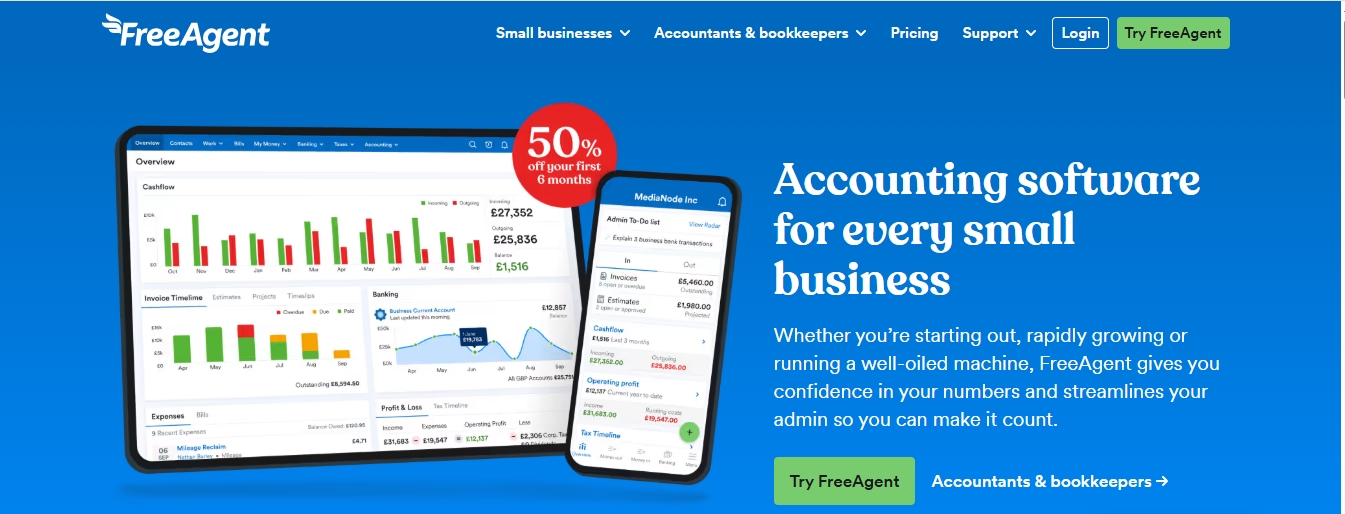
FreeAgent is a cloud-based platform that empowers small business owners to manage invoices, payroll, and taxes with ease. It’s one of the most user-friendly e-commerce bookkeeping solutions, offering an intuitive dashboard that consolidates financial reporting and automation.
FreeAgent Features:
- Estimates and invoices
- Expense, income, and profitability reporting
- Time tracking
- Reporting dashboard for taxes, expenses, and more
- Bank connections for transaction imports
FreeAgent’s automation capabilities make it perfect for entrepreneurs who want to simplify day-to-day accounting.
FreeAgent Pros:
- Simple and easy-to-use interface
- Free pricing plan available
- Frequent feature updates
- Excellent tax reporting functionality
FreeAgent Cons:
- Slightly higher pricing than competitors
- Limited invoice templates
- No 24/7 customer support
FreeAgent is particularly valuable for small businesses that want cloud accounting software for e-commerce with strong automation and integrated tax tools.
Streamline Your Finances with Expert Help
Looking to integrate accounting software for eCommerce into your business operations? AWISEE connects you with the right software providers and helps tailor a system that fits your growth goals.
2. Wave Accounting

Website: waveapps.com
Wave Accounting is a web-based platform designed for small e-commerce owners who need simplicity and affordability. It combines invoicing, payroll, and reporting into one free and efficient e-commerce bookkeeping software. Its bank reconciliation feature connects accounts from PayPal, Stripe, or other sources for real-time transaction tracking.
Wave Features:
- Invoicing and billing
- Payment tracking
- Payroll and finance management
- Receipt management
Wave’s easy navigation makes it ideal for new online sellers who want to automate bookkeeping without paying premium prices.
Wave Pros:
- 100% free for core features
- Low-cost credit card and transfer rates
- Mobile app for real-time access
Wave Cons:
- No cash-basis accounting
- Only 12 base reports available with no customization
Wave stands out as a simple, intuitive, and cost-effective e-commerce accounting solution 2026 for small online retailers.
3. NetSuite
Website: netsuite.com
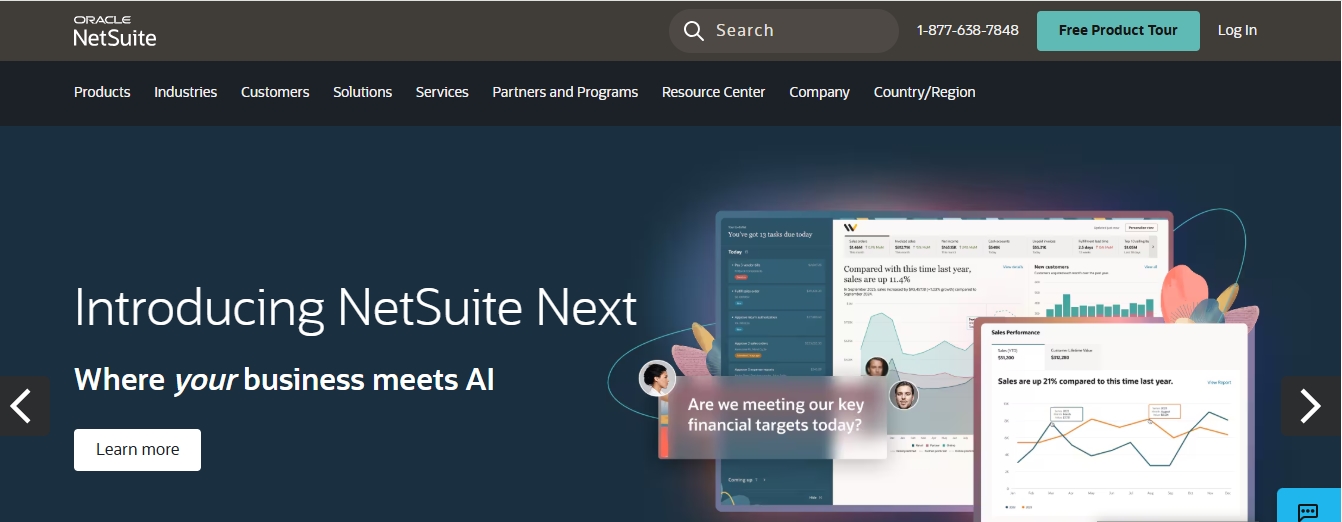
NetSuite is the most comprehensive accounting automation for e-commerce businesses at the enterprise level. Built for scalability, it integrates core financial, compliance, and business management tools to support complex e-commerce operations worldwide.
NetSuite Features:
- Billing and revenue recognition
- Planning and budgeting
- Global accounting and multi-currency support
- Sales order and returns management
- Inbound and outbound logistics
NetSuite automates workflows and consolidates financial data across subsidiaries, improving compliance with global accounting standards like GAAP and SOX.
NetSuite Pros:
- Ideal for large multinational companies
- Extensive compliance and reporting tools
- Advanced ERP and logistics support
- Handles multi-currency, multi-location businesses
NetSuite Cons:
- Expensive for SMEs
- Requires multiple modules for full functionality
NetSuite remains the preferred choice for enterprise-level online retailers that require financial management tools for e-commerce with real-time global oversight and advanced analytics.
4. Xero

Website: xero.com
Xero is a flexible accounting software for ecommerce designed for small to medium businesses. Its clean interface and integration with banks and payment gateways make financial tracking simple and effective.
Xero Features:
- Inventory and stock management
- Bank reconciliation
- Contact and vendor management
- Invoicing and payments
- Payroll
- Mobile apps for Android and iOS
Xero automates reconciliation, giving e-commerce sellers a clear overview of cash flow and performance.
Xero Pros:
- Affordable and user-friendly
- Connects to all major banks
- Generates customizable financial reports
Xero Cons:
- Limited user permissions
- Support only through email
- Some transactions need manual review
As one of the most trusted e-commerce accounting tools, Xero enables small businesses to handle growth without compromising accuracy or control.
5. Finaloop

Website: finaloop.com
Finaloop is a next-generation e-commerce bookkeeping software developed exclusively for online retailers and DTC brands. It replaces traditional bookkeeping and external CPAs with real-time automation, providing up-to-the-minute insights into your store’s financial performance.
Finaloop Features:
- Real-time bookkeeping and reconciliation
- Inventory and purchase order management
- Invoicing and billing
- Loan and payout reconciliation
Finaloop integrates with Shopify, WooCommerce, Amazon, Stripe, and PayPal to deliver seamless financial oversight.
Finaloop Pros:
- Real-time dashboards for cash flow, profit, and balance sheets
- Instant alerts for overspending or margin drops
- Automated 3-way reconciliation
- Native e-commerce integrations
- Fast onboarding and responsive support
Finaloop Cons:
- Tailored only for e-commerce brands
- Less customizable for complex accounting setups
- Pricey for very small startups
Finaloop is an all-in-one e-commerce accounting solution 2026, ideal for data-driven e-commerce founders who value automation and real-time insights.
What to Look for in Accounting Tools for Online Sellers
Choosing the right accounting software for ecommerce requires understanding the unique needs of digital businesses. Look for automation, integration, and scalability when selecting a tool.
Key Features to Consider Include:
- Integration with e-commerce platforms like Shopify or Amazon
- Real-time transaction syncing and reconciliation
- Multi-currency and tax compliance features
- Automation for invoicing, payroll, and expense tracking
Selecting an accounting system that fits your business model helps prevent data loss and ensures seamless financial reporting as your store grows.
Common Accounting Mistakes E-Commerce Owners Should Avoid
Even the best e-commerce accounting tools can’t fix poor accounting habits. Many business owners make the same avoidable mistakes that lead to cash flow problems or tax issues.
Common Mistakes Include:
- Mixing personal and business finances
- Failing to record expenses regularly
- Ignoring sales tax obligations
- Using manual spreadsheets instead of e-commerce bookkeeping solutions
Avoiding these pitfalls ensures better accuracy, improved compliance, and more predictable financial planning.
How Real-Time Analytics Help You Make Better Financial Decisions
In 2026, e-commerce businesses can’t afford to make decisions based on outdated data. Real-time analytics, available through modern accounting software for ecommerce, give business owners instant access to cash flow, expenses, and sales insights. According to Finoptimal, “Automation of financial processes can save 30-40% of time for firms doing reconciliation, journal entries, etc.”
Ways Real-Time Analytics Improve Decision-Making:
- Identifies profit trends and spending inefficiencies in real time.
- Detects sudden changes in expenses or revenue before they become major issues.
- Enhances forecasting accuracy by connecting sales and accounting data.
By combining automation with live reporting, e-commerce accounting tools provide business owners with the agility to act immediately on new financial insights, helping maintain profitability and operational efficiency in a fast-paced digital market.
Future of E-Commerce Accounting: Predictive Analytics and AI Forecasting
The next generation of accounting software for ecommerce will rely heavily on artificial intelligence and predictive analytics. Instead of simply recording financial history, future tools will forecast performance, automate strategic planning, and detect anomalies automatically.
Key Trends Shaping The Future:
- AI-driven forecasting to predict seasonal sales and cash flow patterns.
- Predictive accounting models that automatically categorize and reconcile transactions.
- Real-time fraud detection using pattern recognition.
- Personalized business insights based on your store’s historical data.
These developments will redefine e-commerce bookkeeping solutions, giving brands unprecedented control and foresight. In 2026 and beyond, accounting won’t just record data, it will interpret and act on it, transforming the financial strategy of every e-commerce business.
The Top 5 Accounting Software for eCommerce Businesses (2026)
Running an online business requires speed, accuracy, and financial transparency. The right accounting software for ecommerce streamlines your operations by automating reconciliation, expense tracking, and tax filing,all while providing actionable insights in real time. Here are the five accounting software for ecommerce that earned a place on the shortlist, and why.
| Software | Best For | Key Features | Pros | Cons |
| FreeAgent | Small business owners | Invoicing, tax reporting, time tracking, bank integrations | Simple UI, tax-ready reports, free plan | Limited templates, no 24/7 support |
| Wave Accounting | Small business & freelancers | Invoicing, payroll, receipts, billing | Free, mobile apps, affordable payments | No cash-basis accounting, limited reports |
| NetSuite | Large enterprises | Global accounting, ERP integration, compliance tools | Multi-currency, enterprise-grade, advanced automation | Expensive, complex setup |
| Xero | Small to mid-size e-commerce | Bank reconciliation, inventory, invoicing | Easy to use, customizable reports | Email-only support, manual review |
| Finaloop | E-commerce & DTC brands | Real-time bookkeeping, 3-way reconciliation, tax-ready | Real-time dashboards, e-commerce integration | E-commerce-only focus, costly for startups |
Find the Perfect Fit for Your E-Commerce Accounting Needs
AWISEE acts as your trusted intermediary — comparing tools, pricing, and features across top e-commerce bookkeeping software to deliver the best match for your business.