

Influencer marketing for games has rapidly become the backbone of modern game promotion. The gaming landscape in 2026 is more competitive than ever, with indie titles, AAA franchises, mobile games, and early-access projects competing for the same audience attention. Players today are skeptical of traditional advertising and rely heavily on creators to guide their decisions. They want real gameplay, real reactions, and real opinions. This trust has transformed creators into powerful distribution channels. According to influencer, “The global gaming market is poised for substantial growth, with annual revenues expected to reach $503.14 billion by 2025, up from $396 billion in 2023.”
Gaming communities follow influencers across platforms, and their feedback often shapes the public perception of new titles. Studios now prioritize creator marketing during every stage of the development cycle—pre-launch teasers, beta tests, launch-day streams, and post-launch content. Developers also rely on influencers for player retention by using them to highlight updates, explain patch notes, and showcase new features. The result is a marketing ecosystem where creators define momentum. This guide explains exactly how influencer marketing for games works, why it matters, and how studios can build high-impact strategies for 2026 and beyond.
Launch Your Game With High-Impact Creators
AWISEE specializes in creator partnerships designed for pre-launch teasers, beta access, review content, and launch-day streaming.
Understanding How Influencer Marketing for Games Works Today
Influencer marketing for games works differently from marketing in other industries. Gamers need proof. They want evidence that a game is fun. They want to see a real reaction, not a polished commercial. This is why influencer partnerships for games matter so much in 2026.
The Psychology of Gamer Trust
Gamers follow creators because they like:
- their humor
- their gameplay style
- their taste in genres
So when a creator recommends a title, it feels personal. It feels honest. This emotional connection is the foundation of gaming influencer marketing.
Why Gamers Prefer Creator Recommendations Over Ads
Gamers ignore ads.
But they do not ignore gameplay.
A short gameplay clip posted by game promotion influencers can outperform a studio trailer. Players want authenticity. They want to see real mechanics, real difficulty, and real reactions.
How Game Studios Use Creator Content to Build Community
Creators help studios build:
- loyal communities
- active Discord groups
- long-term engagement cycles
When creators explain updates, share gameplay tips, or discuss new features, the community stays alive. This is why influencer marketing for games remains so powerful during the entire game lifecycle.
Types of Gaming Influencers & Who to Choose
Every creator plays a different strategic role. Choosing the wrong creator weakens your game launch influencer strategy.
Macro, Micro, and Nano Creators: What Drives Conversions?
Here is a simple breakdown:
- Macro Influencers: Best for awareness.
- Micro-influencers gaming: Best for conversions because their audiences are loyal.
- Nano Influencers: Best for niche communities and low-budget campaigns.
Micro-influencers gaming often produce the strongest engagement. Their communities trust them deeply.
Esports Athletes vs. Streamers vs. Gaming Content Creators
Three major creator types dominate influencer marketing for games:
- Esports athletes: Perfect for competitive games
- Twitch streamers: Perfect for launch-day hype
- YouTube creators: Perfect for long guides, reviews, and story coverage
Each one serves a different purpose inside your gaming influencer strategy.
Why Micro-Influencers Gaming Often Outperform Big Streamers
Micro creators frequently deliver:
- higher engagement
- deeper trust
- clearer communication
- more authentic gameplay
They also cost less, which makes them ideal for indie studios or early-stage launches.
Gaming Influencer Marketing Platforms & Channels (2026 Overview)
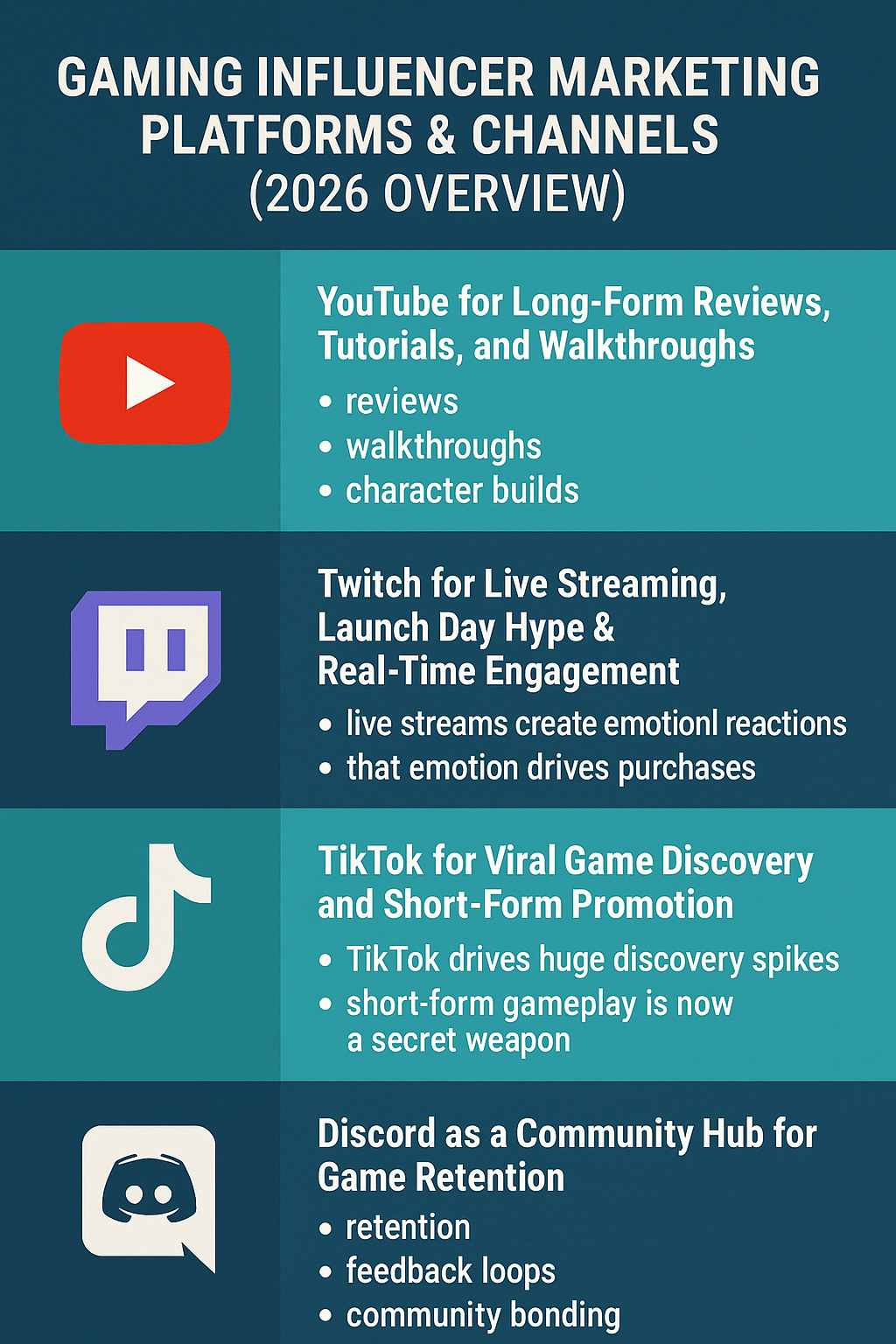
Choosing the right platform is a major part of influencer marketing for games.
YouTube for Long-Form Reviews, Tutorials, and Walkthroughs
Players use YouTube to research games. They watch:
- reviews
- walkthroughs
- character builds
- story breakdowns
This makes YouTube essential for gaming influencer marketing.
Twitch for Live Streaming, Launch Day Hype & Real-Time Engagement
Live streams create emotional reactions.
That emotion drives purchases.
Twitch becomes especially important for influencers for game launches.
TikTok for Viral Game Discovery and Short-Form Promotion
TikTok drives huge discovery spikes.
Favikon notes that TikTok is one of the fastest-growing channels for gaming campaigns (source: https://www.favikon.com/blog/influencer-marketing-for-games).
Short-form gameplay is now a secret weapon for influencer marketing for games.
Discord as a Community Hub for Game Retention
Discord helps with:
- retention
- feedback loops
- community bonding
This makes Discord a long-term asset for influencer partnerships for games.
Instagram for Visual Promotion, Reels, and Behind-the-Scenes
Instagram is not the best platform for gamer discovery.
But it works well for:
- character art reveals
- developer updates
- brand storytelling
Crafting a High-Impact Gaming Influencer Strategy
A clear gaming influencer strategy helps studios avoid mistakes.
You always start with three questions:
- Who is the audience?
- What genre is the game?
- What content format fits the message?
Identifying the Right Audience & Genres
Different genres attract different players.
FPS fans want fast clips.
RPG fans want deep analysis.
Mobile game fans want short demos.
Aligning Influencers With Game Type
This is important for any game launch influencer strategy:
- AAA games = macro creators
- Indie games = micro-influencers gaming
- Mobile games = TikTok creators
- Strategy games = long-form YouTubers
Avoiding Misalignment and Fake Influencers
Fake engagement is still a problem.
Studios must check:
- suspicious comments
- follower patterns
- bot-like engagement
Authenticity ensures the success of influencer marketing for games.
Influencers for Game Launches: How to Build Pre-Launch & Launch-Day Buzz
Influencers for game launches can decide the success or failure of a release. Players judge the game within hours.
Pre-Launch Teasers, Trailers & First-Look Gameplay
Creators share:
- countdowns
- teasers
- early impressions
These build early interest.
Beta Access, Closed Tests & Early Review Campaigns
Early access remains one of the top tools inside game promotion influencers workflow.
Launch-Day Streaming and Real-Time Player Acquisition
Large creators help generate massive spikes in downloads.
Using Influencer Partnerships for Games to Sustain Post-Launch Interest
You maintain momentum with:
- challenge videos
- patch reviews
- DLC breakdowns
- seasonal content
This long-term approach is essential in influencer marketing for games.
Best Game Promotion Influencers by Category
Different game promotion influencers serve different needs.
Top Streamers for Competitive Titles
Perfect for PvP, FPS, battle royale, and esports titles.
Top YouTubers for Story and Indie Games
Great for deep analysis and review content.
Top TikTok Creators for Mobile and Casual Games
Short clips lead to fast installs.
Top Reviewers for Hardcore Gaming Audiences
Perfect for players who want detailed breakdowns.
Content Formats That Drive the Highest Impact in Gaming
These content types always perform well inside influencer marketing for games.
Let’s Plays, Tutorials & Walkthroughs
Great for learning mechanics.
Live Streams, Reaction Videos, and Beta Testing
Great for emotional impact.
UGC Content, Memes & Short-Form Viral Clips
Great for mobile and casual games.
Community Events, Tournaments, and Giveaways
Great for long-term engagement.
Budgeting & Pricing for Gaming Influencer Campaigns
Budgeting is a key part of influencer marketing for games. Some studios spend millions on big launches. Others spend only a few hundred dollars. Both approaches can succeed when the gaming influencer strategy is clear.
CPV (Cost per View) in Gaming
Many campaigns use CPV because it gives predictable costs.
Typical CPV:
- YouTube: $0.02–$0.20
- TikTok: $0.01–$0.05
- Higher for competitive or AAA titles
These numbers help you estimate how much influencer marketing for games will cost for each creator.
CPM, CPE, and Performance-Based Models
Studios often use:
- CPM: cost per 1,000 views
- CPE: cost per engagement
- CPI: cost per install
Performance-based pricing works well for mobile games. These campaigns use trackable links to measure real installs.
How Costs Differ Across Platforms
Platform cost differences matter:
- Twitch: expensive but high emotional impact
- YouTube: stable and ideal for long reviews
- TikTok: best for viral discovery
- Instagram: weaker for gaming discovery but good for visuals
Choosing the right platform is part of a good gaming influencer strategy.
Compliance, FTC Guidelines & Ethical Creator Promotion
Influencer marketing for games relies heavily on trust. That is why ethical rules matter.
Paid Partnership Disclosures
Creators must clearly show when content is paid.
FTC guidelines require:
- #ad
- #sponsored
- verbal disclosure in videos
This protects players from confusion and keeps gaming influencer marketing transparent.
Ethics in Sponsored Gameplay
Gamers dislike forced or scripted reactions.
Creators must remain honest, even during paid campaigns.
This honesty strengthens long-term trust.
Transparency for In-Game Purchases and Loot Boxes
Creators must explain:
- What features are free
- What requires payment
- How loot boxes or skins work
This clarity supports healthy influencer partnerships for games.
How To Measure ROI in Gaming Influencer Campaigns?
Digital Marketing Institute noted that Statista reports that 38% of marketing professionals use AI for influencer marketing on a limited basis while another 22% use AI extensively. Measuring ROI is essential for influencer marketing for games. Studios want to know what works, what fails, and what brings real players.
Gameplay Installs, Downloads & First-Day Retention
Downloads show interest.
Retention shows commitment.
Studios track Day 1, Day 7, and Day 30 retention to understand which game promotion influencers brought strong players.
Attribution Models for Gaming Campaigns
Useful tools include:
- custom tracking links
- promo codes
- Google Analytics
- Adjust, Appsflyer
These show which creator delivered the most value.
Tracking In-Game Purchases, LTV & Cohort Behavior
High-quality players often come from trusted creators.
Studios analyze:
- ARPU
- LTV
- time-based cohorts
This helps refine the gaming influencer strategy for future campaigns.
Measuring Discord Growth & Community Engagement
Discord server growth is a major signal.
If new players join Discord after a campaign, the influence was strong.
Using Tracking Links, Promo Codes & A/B Testing
A/B testing shows:
- Which creator format works
- Which platform performs better
- What content style converts
These insights shape the perfect game launch influencer strategy.
Common Mistakes in Gaming Influencer Campaigns (And How to Avoid Them)
Even skilled studios make mistakes.
Avoiding them strengthens influencer marketing for games.
Choosing Wrong Influencers
A mismatch between influencer and genre leads to low engagement.
Creators must align with the game’s theme.
Over-Reliance on One Platform
Only using Twitch or only using TikTok limits results.
Balanced platform usage improves reach.
Ignoring Community Feedback
Gamers give clear signals.
Ignoring feedback damages community trust and future sales.
Late Outreach Before Launch
Influencer outreach takes time.
Rushed campaigns rarely perform well.
Final Checklist for Running a Successful Gaming Influencer Campaign
A simple checklist helps you run strong campaigns.
Audience Fit Checklist
- Does the creator match the game genre?
- Is the audience real gamers?
- Is their content gameplay-focused?
Platform Checklist
- Would long-form content help?
- Is live streaming useful?
- Will Discord strengthen retention?
Content & Tracking Checklist
- Are tracking links ready?
- Are promo codes tested?
- Are KPIs defined before launch?
The gaming world moves fast. Influencers help studios keep up. They shape hype, opinions, and long-term community growth. Influencer marketing for games helps studios reach players authentically and effectively.
Boost Your Game’s Visibility With the Best Gaming Influencer Marketing Services
AWISEE offers the best gaming influencer marketing services, helping studios partner with creators who actually drive installs, retention, and hype.