
Brands preparing for influencer campaigns in 2026 must understand Instagram influencer pricing at a deeper level than ever before. The platform is now a sophisticated ecosystem where creators function like production studios, not casual content posters. Because of this evolution, Instagram influencer pricing considers factors such as editing time, niche trust, audience behavior, licensing rights, and deliverable complexity. Many marketers still assume pricing is based solely on follower count, but that view is outdated. Engagement rate carries more weight. Niche strength determines conversion potential.
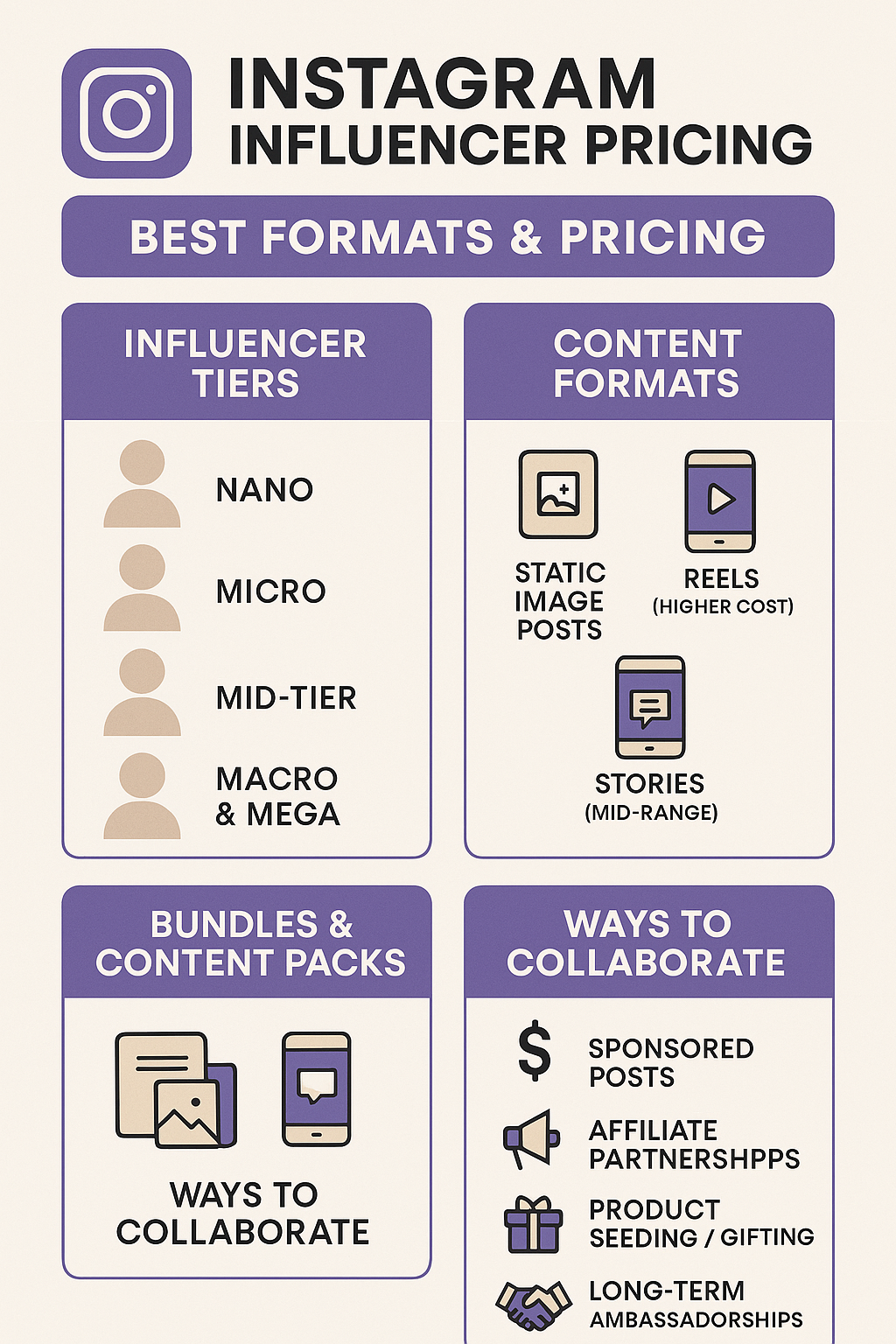
Instagram influencer pricing also varies depending on whether brands want long-term rights, paid ads usage, or cross-platform bundles. Understanding these components allows brands to negotiate more effectively, forecast budgets accurately, and choose formats that match their strategic goals. This guide breaks down all major pricing patterns with clarity and practical examples.
Instagram Influencer Pricing (2026) – Real Benchmarks
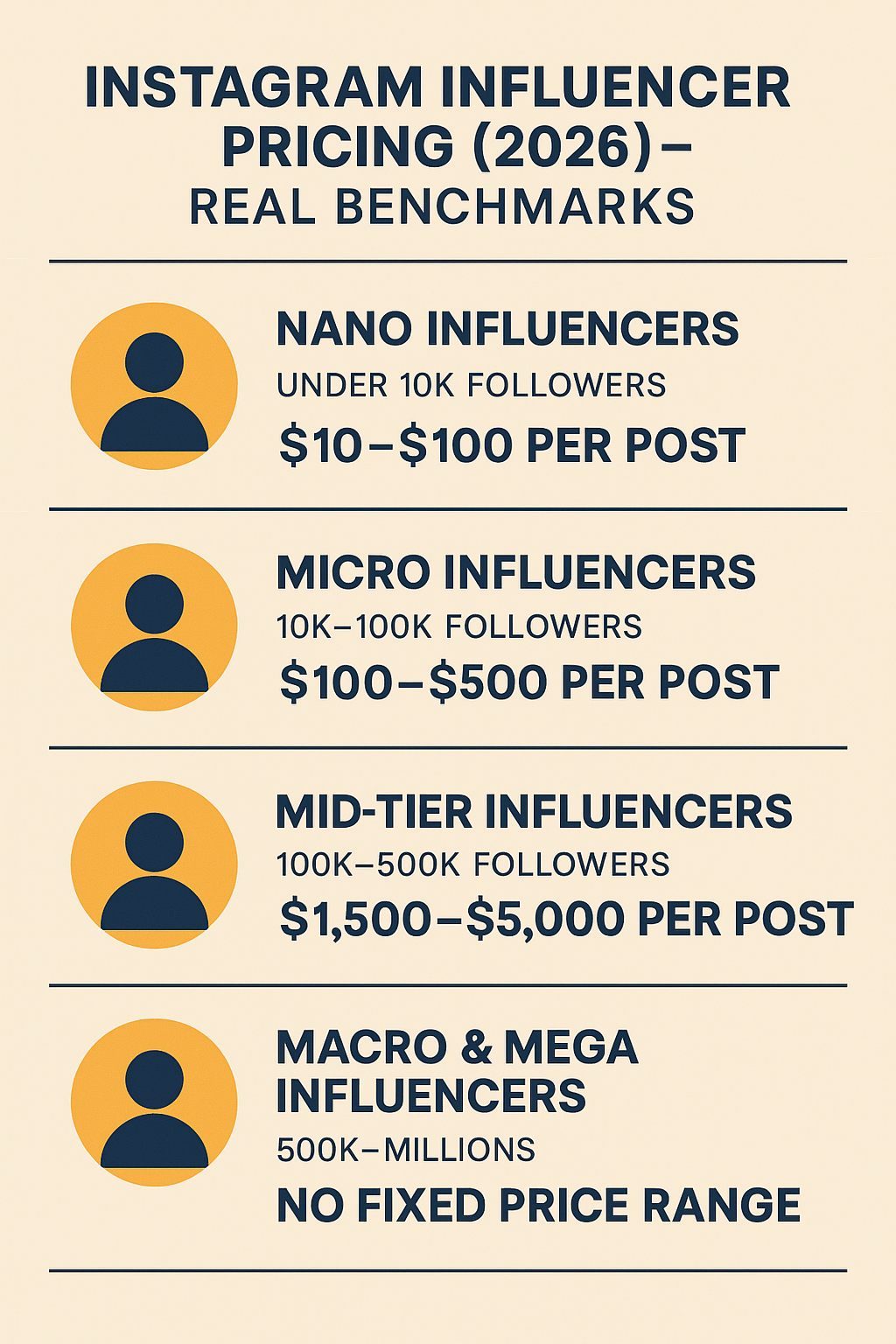
According to Influencer Marketing Hub, “Instagram mid-tier influencers can earn as much as $5,000 per post, although the actual rates may vary based on the following size and the content quality.” Here are the most reliable pricing benchmarks for 2026.
1. Nano Influencers (Under 10K Followers)
Nano creators charge $10–$100 per post.
This makes nanos ideal for brands building early reach.
Connect With the Best Instagram Influencers in Your Niche
AWISEE helps brands connect with top Instagram influencers in their exact niche—creators who convert, educate, and inspire—at a very reasonable price.
2. Micro Influencers (10K–100K Followers)
Shopify indicates most micro creators charge $100–$500 per Instagram post.
This tier offers some of the best ROI for Instagram influencer pricing.
3. Mid-Tier Influencers (100K–500K Followers)
Later reports that mid-tier creators charge $1,500–$5,000 per post.
Brands choose this tier when they want large reach without celebrity-level costs.
4. Macro & Mega Influencers (500K–Millions)
Pricing rises sharply in this tier. Reels, multi-post packages, and content licensing increase Instagram influencer pricing even more.
This tier has no fixed price range because reach and demand vary widely. Hype Auditor noted that for a mega-influencer with over 1 million followers, a single sponsored post can cost upwards of $25,000!
Format-Based Pricing: Why Content Type Changes the Cost
Different formats shape Instagram influencer pricing because they require different workloads.
Static Image Posts
- Simple to produce
- Most affordable
- Usually priced within the basic influencer tier benchmarks
Brands choose static posts when they want clean visuals and simple product highlights.
Reels (Higher Cost)
Reels always cost more because of production complexity.
Later confirms that creators consistently charge more for Reels than for static posts.
This makes Reels a premium format in Instagram influencer pricing.
Stories (Mid-Range)
Stories offer flexibility with lower cost:
Common bundles include:
- 3-story set
- 5-story sequence
- Story + link + CTA
Their pricing sits between static posts and Reels.
Bundles & Content Packs
Creators often offer combined packages like:
- Reel + Story
- Static Post + Stories
- Multi-platform bundles (Instagram + TikTok)
Bundles reduce the cost of Instagram post deliverables while increasing campaign value.
What Determines Instagram Influencer Pricing?
Creators do not set prices randomly. The entire structure of Instagram influencer pricing comes from measurable, predictable factors. When brands understand these factors, they avoid confusion and build fairer partnerships.
Follower Count & Influencer Tier
Influencer tiers affect the Instagram sponsorship rates you will pay.
Creators fall into:
- Nano
- Micro
- Mid-tier
- Macro
- Mega
Every tier influences the starting Instagram post pricing a brand expects.
Engagement Quality
Engagement is one of the strongest pricing signals.
A creator with a smaller but loyal audience may charge more because that audience buys more.
Higher engagement almost always increases the cost of Instagram post rates.
Content Type & Production Skill
Different formats require different effort levels:
- Reels need editing, scripting, transitions, and multiple takes
- Static posts need less time
- Stories sit in the middle
This difference directly affects Instagram influencer rates 2026 and the cost of Instagram influencers.
Campaign Scope
More deliverables increase Instagram influencer pricing:
- More posts
- More revisions
- More usage rights
- More platforms
Brands often overlook usage rights, but they influence influencer collaboration pricing more than expected.
Niche Strength
Some niches — like fitness, finance, wellness, beauty, and travel — typically command higher Instagram creator costs because conversions are stronger.
You do not need to memorize every factor. But once you understand which ones matter for your brand, Instagram influencer pricing becomes much easier to estimate.
Ways To Collaborate With Instagram Influencers
Many brands think collaboration means a single paid post. But 2026 offers many flexible formats to optimize influencer collaboration pricing.
Sponsored Posts (Static or Carousel)
Best for product launches and lifestyle images.
Reels Collaboration
AWISEE reported that 4.5 billion+ Instagram reels are reshared daily. It is ideal for tutorials, unboxing, transformations, reviews, and demonstrations.
Story Campaigns
Perfect for flash sales, discounts, urgent messages, and link-based promotions.
Affiliate Partnerships
Shopify notes that many brands prefer performance-based partnerships.
Product Seeding / Gifting
Useful for brands with limited budgets that need early UGC content.
Long-Term Ambassadorships
Creates consistent messaging and deeper trust.
How To Negotiate Instagram Influencer Pricing In 2026
Negotiation in influencer marketing is not about pushing creators to lower rates. It is about building clarity so both sides understand the value being exchanged. When brands learn how Instagram influencer pricing works, they negotiate with confidence and fairness. These small adjustments often reduce the cost of Instagram influencers without hurting the relationship.
Here are simple negotiation approaches:
Use Engagement Rate As Your Anchor
A creator with a 10% engagement rate usually deserves higher Instagram sponsorship rates than someone with 1%. Engagement shows trust, and trust drives conversions. During negotiation, ask creators for:
- Screenshot of insights
- Audience demographics
- Average Story views
- Average Reel reach
Clear data makes Instagram influencer pricing easier to compare.
Offer Bundles Instead of One-Off Posts
Creators love predictable workflow. When brands offer bundle deals, creators often lower their Instagram post pricing. Bundles also make the cost per deliverable more reasonable.
Examples:
- 1 Reel + 3 Stories
- 2 Static Posts + 1 Carousel
- Instagram + TikTok cross-platform packages
This keeps influencer collaboration pricing stable and scalable.
Discuss Usage Rights Early
Many brands assume they can reuse influencer content in ads or across platforms forever. But licensing is a major part of Instagram influencer pricing. Creators charge extra for:
- Paid ads usage
- Long-term usage
- Whitelisting
- Commercial licensing
Talking about rights early prevents unexpected increases in the cost of Instagram post content.
Propose Long-Term Partnerships
Long-term deals help both sides. Creators prefer predictable income, so they often reduce Instagram influencer rates 2026 when brands commit for multiple months.
Brands benefit because:
- Messaging becomes consistent
- The audience recognizes the brand over time
- Trust increases
- Performance improves
This is one of the strongest ways to bring down Instagram influencer pricing without damaging quality.
Share A Clear Creative Brief
Creators often charge more when the brief is vague or unclear because vague direction leads to multiple revisions. A precise brief reduces both time and cost.
A clear brief improves the overall Instagram creator costs and keeps negotiation smooth.
Pros And Cons Of Instagram Influencer Pricing Models
There is no single model that works for everyone. The best model depends on your goals, industry, and budget. But understanding the strengths and weaknesses helps brands choose wisely.
Pros Of Traditional Flat-Fee Pricing
- Predictable budget
- Clear deliverables
- Works well for branding campaigns
- Effective for Reels and static posts
The simplicity of flat-fee pricing helps brands estimate Instagram influencer pricing quickly.
Cons Of Flat-Fee Pricing
- Higher upfront cost
- No guaranteed performance
- Harder for small brands to scale
Flat-fee pricing works best when the goal is visibility, not direct sales.
Pros Of Affiliate Or Performance-Based Models
Many e-commerce brands prefer commission-based partnerships.
Benefits include:
- Very low risk
- Payment only when results appear
- Influencers stay motivated
- Great for micro and nano creators
This model often lowers Instagram influencer pricing for growing brands.
Cons Of Affiliate Models
- Harder to motivate large influencers
- Requires tracking tools (codes, UTMs)
- Varies widely by niche
- Influencers may prefer guaranteed money
Still, it remains one of the most flexible structures in influencer collaboration pricing.
Pros Of Product Gifting
- Very low cost
- Great for early UGC
- Helps brands test relationships
Gifting reduces the cost of Instagram influencers, but results are not guaranteed.
Cons Of Gifting
- No promised content
- Many creators decline gifting
- Hard to plan campaigns
Gifting is useful for small brands but less reliable for performance-focused campaigns.
Brands that study Instagram influencer pricing avoid overspending. Hybrid pricing, affiliate models, gifting, bundles, and long-term partnerships will define the future. The smartest brands test ideas, optimize performance, and scale only what works. When creators feel respected and briefs are clear, influencer marketing becomes one of the strongest channels for building awareness, trust, and sales.
Make Instagram Influencer Campaigns Affordable and High-Impact
AWISEE uses data, engagement metrics, and niche matching to secure top influencers at budget-friendly rates, ensuring maximum value for your campaigns.